
State unfair and deceptive practices (UDAP) statutes offer a promising source of claims to challenge abusive “zombie” mortgages. Many junior mortgages were originated in the years leading up to the 2007 subprime foreclosure crisis. When borrowers defaulted on these second mortgages during the crisis, loan holders stopped collecting because the homes were underwater, meaning there would be nothing for a junior mortgagee to recover after a foreclosure. Two decades later the values of these properties have increased, often substantially. Holders of dormant, or zombie, second mortgages are reviving them, demanding enormous sums including accrued interest, and threatening foreclosure.
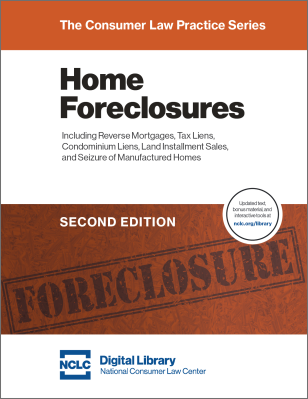
How to defend foreclosure of second mortgages generally and especially zombie mortgages is detailed in the just-revised edition of NCLC’s Home Foreclosures Chapter 12. NCLC also provides a “practice suite” linking to resources devoted to zombie mortgages, including sample pleadings and demand letters, practice materials that speakers have submitted at NCLC conferences, links to relevant subsections of various NCLC treatises, reports, court decisions, CFPB guidance, model legislation, and videos. Of special note is the NCLC article 15 Ways to Fight Foreclosure of Zombie Second Mortgages (Dec. 9, 2024).
Nevertheless, zombie second mortgage foreclosure defense has not always been successful, and this article sets out another promising way to challenge zombie mortgage abuses—claims under state UDAP statutes. See, e.g., Linderman v. NewRez L.L.C., ___ F. Supp. 3d ___, 2026 WL 1266163 (N.D. Ill. May 8, 2026) (upholding proposed class plaintiff’s UDAP claims against the servicer and holder of a zombie mortgage).
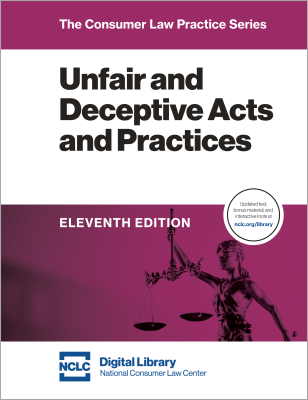
This article focuses on why zombie mortgage servicers and holders’ long-term abandonment of communication with consumers is both unfair and deceptive in violation of state UDAP statutes. Each state has at least one UDAP statute that prohibits deceptive practices and usually unfair practices. NCLC’s Unfair and Deceptive Acts and Practices discusses these statutes in detail. Appendix A is a state-by-state summary of key features and citations to each state’s UDAP statutes.
UDAP claims in most states can target unfair or deceptive practices involving mortgage origination, servicing, and foreclosures. Mortgage lenders, holders, and their servicers often appear as defendants in UDAP lawsuits. See NCLC’s Unfair and Deceptive Acts and Practices §§ 2.2.1.7, 2.2.3.3, 6.7.
Advantages of a UDAP Challenge to Zombie Mortgages
The concepts of unfairness and deception are tailor-made to address the harsh debt collection practices associated with zombie mortgages.
—Broad, Flexible Standards Applicable to Almost Any Abusive Mortgage Practice
UDAP unfairness and deception are broad and flexible terms that can evolve with new forms of abuse. They have a significant history of judicial interpretation and incorporate standards of unfairness and deception established by both the Federal Trade Commission (FTC) and Consumer Financial Protection Bureau (CFPB). Courts have broadly construed unfairness and deception.
Many state UDAP laws, either by an express statutory provision or by judicial construction, give substantial weight to interpretations of the FTC’s unfairness and deception standards. Because state standards are derived from this common source, practitioners can point to helpful rulings from courts in other jurisdictions that found practices related to zombie foreclosures to be unfair or deceptive.
—Facilitation of Class Actions
UDAP unfairness and deception claims can also facilitate class action certification. The standards are objective in that they focus on the tendency or capacity of a practice to mislead and harm a group of consumers, rather than on the subjective state of mind of each individual class member.
—UDAP and Debt Collection Claims Go Hand in Hand
UDAP and claims under state debt collection statutes and the federal Fair Debt Collection Practices Act (FDCPA) can often be combined effectively in a complaint. “Unfairness,” “deception,” and unconscionable conduct in debt collection are prohibited by many FDCPA provisions and their state analogues. See 15 U.S.C. §§ 1692e, 1692f. The FDCPA and UDAP unfairness and deception standards have a common source in the FTC Act. See NCLC’s Fair Debt Collection § 8.1.2.
Although debt collection claims must address additional and distinct elements beyond those of a UDAP claim, the basic facts that support a claim of deception or unfairness for UDAP purposes should also satisfy the unfairness and deception elements of debt collection claims. See generally NCLC’s Fair Debt Collection Chapter 7, Chapter 8, and Appendix D (summarizing state debt collection statutes).
—Powerful Private Remedies Including Equitable Relief
A significant benefit of UDAP statutes is their private remedies—actual damages, typically attorney fees and equitable relief, and often either minimum, multiple, or punitive damages. See NCLC’s Unfair and Deceptive Practices Chapter 12.
Equitable relief can include an order restraining a pending foreclosure sale. See Garcia v. First Franklin, 2025 WL 4220407, at *4 (C.D. Cal. Oct. 24, 2025). Equitable relief can even set aside a completed foreclosure sale and reinstate the mortgage. See Kattar v. Demoulas, 739 N.E.2d 246, 259–260 (Mass. 2000). A judicial mortgage foreclosure has historically been treated as an action in equity. See NCLC’s Home Foreclosures § 5.10. Therefore, equitable relief should include barring the entry of judgment in a judicial foreclosure where unfair or deceptive practices contributed to the alleged default.
In many zombie mortgage foreclosures, the arrearage of interest and fees that accrued during years of noncommunication presents an overwhelming burden for the borrower even when foreclosure is denied. Given the equitable nature of foreclosures, courts granting equitable relief under a UDAP statute have a wide range of options to address such an arrearage, including ordering the abatement of accrued interest and fees, restructuring the debt, and ordering limits on future collection activities to remedy past harm from the unfair and deceptive practices. See NCLC’s Home Foreclosures § 5.12.2.3.
Limitations to the Use of State UDAP Statutes in Certain States
Zombie mortgage UDAP claims are available in most states, but practitioners must be aware of limitations in certain states. Several statutes prohibit deceptive but not unfair, unconscionable, or abusive practices. See NCLC’s Unfair and Deceptive Acts and Practices Appendix A. Of course, as discussed infra, in those states a deception claim involving zombie mortgage conduct may be available.
Certain UDAP statutes exclude the extension of credit or loans by certain regulated creditors, although this may not exclude the servicing of loan products. See id. §§ 2.2.1, 2.3.3. In a few states, the statute is inapplicable to debt collection or foreclosures. Id. §§ 2.2.2, 2.2.3.
A handful of states require that the defendant’s actions impact the public or consumers generally and not just the plaintiff. Id. § 11.4.3. But extensive federal and state regulation of mortgage servicing and foreclosures recognizes the significant public interest in minimizing home foreclosures and in promoting fairness in foreclosure procedures.
Unfairness as Applied to Zombie Mortgages
An effective UDAP claim is that it is an unfair practice to fail to contact a consumer for years concerning a zombie mortgage and then suddenly appear to try to collect all alleged past due interest, fees, costs, and principal in one lump sum under threat of foreclosure. The most common state UDAP definition of unfairness, known as the S&H standard, is based on a Supreme Court ruling construing the FTC Act. This standard articulates the following criteria to determine whether a practice is unfair:
- Does the practice offend public policy? Is it within at least the penumbra of some common law, statutory, or other established concept of unfairness?
- Is the practice immoral, unethical, oppressive, or unscrupulous? and
- Does the practice cause substantial injury to consumers?
Most courts hold that a consumer need not establish all three prongs of this standard. See NCLC’s Unfair and Deceptive Acts and Practices § 4.3.3.3.1.
Some states adopt another unfairness standard based on a congressional definition applicable to the FTC and CFPB. This alternative standard as applicable to zombie mortgages will be addressed briefly later in this article. Certain UDAP statutes prohibit unconscionable or abusive practices, which can have a similar application as a prohibition of unfair practices.
Some UDAP statutes only prohibit deceptive practices, and the last section in this article describes why a zombie mortgage practice can be deceptive under a state UDAP statute. Every state UDAP statute prohibits deceptive practices.
Central to the UDAP application to zombie mortgage abuses is the practice of long-term abandonment of communication with borrowers, causing loan balances and the related liens to grow unnecessarily, leading to foreclosure and loss of homes. The practice of discontinuing contact with borrowers deprives them of the ability to avoid the harm by taking timely and effective actions to address their debts.
Why Zombie Mortgages Are Unfair Under the Public Policy Prong
It can easily be seen that mortgage holders and servicers’ abandonment of communication with borrowers, extending over many years, is unfair under the definition’s first prong dealing with public policy. The public policy against abandonment of communication is embodied in mortgage industry standards, federal and state statutes, and common law. Thus, the public policy of continuity of contact is at least within the penumbra of common law, statutory, and other established concepts of unfairness.
—Continuity of Contact Policy Found in Industry Standards
Fannie Mae and Freddie Mac servicing guides are widely recognized as setting an industry standard. See, e.g., Fried v. JP Morgan Chase & Co., 850 F.3d 590, 601 (3d Cir. 2017) (“Even for mortgages not owned or guaranteed by them, mortgage lenders and servicers are guided in their decisions by Fannie Mae and Freddie Mac requirements.” (internal quotation marks omitted)); Phoenix Light SF Ltd. v. Wells Fargo Bank, 574 F. Supp. 3d 197, 205 (S.D.N.Y. 2021) (Fannie Mae and Freddie Mac guides serve as “as a stand-in for prudent servicing standards”).
Fannie Mae servicers must make “every attempt” to establish contact to evaluate the borrowers’ circumstances and the reason for the default and then offer appropriate workout options to resolve delinquencies. Fannie Mae Servicing Guide §§ A4-1-01, D2-2-01. Freddie Mac requires that its servicers act aggressively to establish contact with borrowers in default and attempt a variety of techniques to reach borrowers until they succeed. Freddie Mac Servicing Guide § 9102.3. At a minimum, when a loan is in default Freddie Mac servicers must be “readily available to the Borrower to offer financial counseling and advice on curing the delinquency and explaining alternatives to foreclosure” and “[m]ake personal contact with the Borrower as early and often as necessary to promptly cure the delinquency.” Id. § 9102.4.
According to FHA mortgage servicing guidelines, servicers must reevaluate borrowers in default monthly for loss mitigation. HUD Handbook 4000.1, § III(A)(2)(g)(ii). While an FHA mortgage is delinquent, the servicer must make multiple attempts per week to contact the borrower. If contact cannot be established, the servicer must arrange a property visit. Id. § III(A)(2)(g)(v).
—Continuity of Contact Policy Found in Federal Statutes and Regulations
UDAP unfairness can arise from violations of other statutes, which may be per se UDAP violations. See NCLC’s Unfair and Deceptive Acts and Practices §§ 3.2, 3.3.
Even if a per se violation is not available, federal servicing statutes and regulations can form the basis for a public policy requiring continuity of contact. Where zombie mortgage conduct for technical reasons does not violate a statute, the practice still can be unfair as within the penumbra of a statutory concept of unfairness. Nor is it relevant that a statute or regulation does not create a private right of action. The unfairness standard looks at the policies behind the statutes and regulations, not their enforcement.
Thus, zombie mortgage conduct can be unfair based on federal mortgage servicing statutes and regulations that mandate that mortgage servicers maintain continuity of contact with borrowers. Mortgage servicing regulations promulgated under the Truth in Lending Act (TILA) and the Real Estate Procedures Act (RESPA) generally apply to junior mortgages as well as first mortgages (certain RESPA servicing rules apply only to closed-end credit. See NCLC’s Home Foreclosures § 12.4). Holders of zombie mortgages and their servicers routinely ignore these regulations.
RESPA mortgage servicing regulations require that servicers:
- Give a written notice to borrowers whenever servicing rights are transferred, 12 C.F.R. § 1024.33;
- Implement a system to handle borrowers’ requests for information and requests to correct account errors, 12 C.F.R. §§ 1024.36, 1024.35;
- Possess guidelines for early intervention and notice to borrowers when they become delinquent, 12 C.F.R. §1024.39;
- Maintain continuity of contact during a delinquency, 12 C.F.R. § 1024.40; and
- Give written notice of decisions on borrowers’ requests for loss mitigation assistance, 12 C.F.R. § 1024.41(c), (d).
See NCLC’s just-released revision of Mortgage Servicing and Loan Modifications Chapter 3.
Zombie mortgage servicers routinely claim that they do not have access to important account history information to allow them to contact the consumer. But RESPA regulations require servicers to maintain a servicing file that allows easy access to account history information. 12 C.F.R. § 1024.38(b). When servicing rights are transferred, both the transferor and transferee servicer must ensure that essential account history information is passed on. 12 C.F.R. § 1024.38(b)(4). See also NCLC’s Mortgage Servicing and Loan Modifications § 3.10.
TILA obligates mortgage creditors to give borrowers periodic mortgage account statements. See NCLC’s Mortgage Servicing and Loan Modifications § 4.2.5. These requirements apply to open-end mortgage credit, 15 U.S.C. § 1637(b), 12 C.F.R. § 1026.7, and to closed-end mortgage credit, 12 C.F.R. § 1026.41. TILA also requires owners of mortgage loans to give borrowers a written notice each time ownership of a loan changes hands. 15 U.S.C. §1641(g); 12 C.F.R. § 1026.39. Each notice of transfer of loan ownership must identify the new loan owner and inform the borrower how to contact the owner.
As a result, RESPA and TILA requirements provide standards that show that zombie mortgage conduct violates public policy where continuity of contact is missing. See Banse v. Statebridge Co., 2025 WL 3764046, at *9 (E.D. Cal. Dec. 30, 2025) (unfairness where no monthly account statements for HELOC sent during fifteen years; referencing TILA periodic statements rules, Regulation Z §§ 226.5, 226.7 [Regulation Z §§ 1026.5, 1026.7]); Garcia v. First Franklin, 2025 WL 4220407, at *4 (C.D. Cal. Oct. 24, 2025) (granting injunctive relief against foreclosure; unfairness likely to be found based on fifteen years of noncommunication about mortgage; unfairness “tethered to” legislatively declared policies including California mortgage servicing laws and the CFPB’s April 2023 Regulation F guidance on collection of time-barred debt); Montoya v. FCI Lender Services, 2025 U.S. Dist. LEXIS 187209, at *23 (C.D. Cal. Sept. 22, 2025) (magistrate decision) (unfairness based on noncommunication over twelve years; referencing policies embodied in the Cal. HBOR servicing obligations and TILA periodic statements requirements).
—Many State Laws Mandate Continuity of Contact
Since the 2007 foreclosure crisis, many states have enacted laws that implement policies of promoting communication between mortgage servicers and borrowers. Many of these laws mandate notices about the availability of loss mitigation, cure rights, and the identity of and contact information for loan owners. See NCLC’s Home Foreclosures § 5.5.2.
—Policy Violations Based on Common Law Standards
Many standard form mortgages obligate the mortgagee to provide monthly account statements. Most standard security instruments also contain a provision that obligates the mortgagee to comply with applicable laws, such as mortgage servicing laws. See NCLC’s Mortgage Servicing and Loan Modifications § 5.5 and NCLC’s Home Foreclosures § 12.6, both newly released revised editions. The servicer’s systematic breach of contract in ignoring applicable servicing requirements can also form the basis for an unfairness finding. See Rose v. Mission Hen L.L.C., 2026 Cal. Super. LEXIS 26174 (Cal. Super. Ct. Mar. 26, 2026) (finding unfairness where no monthly statement or other communications provided for eleven years and mortgage holder and servicer did not provide accurate cure and payoff statements during foreclosure).
The practice of writing off mortgage loans, abandoning communication with borrowers for years, then suddenly threatening foreclosure and demanding exorbitant sums for accrued interest also implicates common law policies embodied in doctrines such as laches, abandonment, and waiver. See NCLC’s Home Foreclosures § 12.8.
Application of “Penumbra” of Unfairness Standards to Multiple Zombie Defendants
The public policy prong of the S&H unfairness standard does not require that, for a practice to be unfair, it violate a statute, common law, or other established concept, but only that it be within the penumbra of some common law, statutory, or other established concept of unfairness. This has important implications where a party to the zombie mortgage is not the one technically with responsibilities under the statute or other established concept.
Consider Linderman v. NewRez L.L.C., ___ F. Supp. 3d ___, 2026 WL 1266163 (N.D. Ill. May 8, 2026), where the court refused to dismiss the borrower’s claim that both a servicer and a holder of a zombie mortgage engaged in unfair conduct under the Illinois UDAP statute. The servicer had demanded payment of years of interest that accrued while no one provided periodic account statements to the borrower. The court relied on an Illinois statute (“the Interest Act”) that declared it unlawful to contract for or collect interest on a HELOC loan for any period when a monthly account statement was not provided. The law effectively made providing monthly statements a condition to the collection of interest on a HELOC.
The defendant servicer in Linderman had attempted to collect interest and foreclose on a HELOC even though the interest it was claiming had accrued during fifteen years while no monthly account statements were provided. The servicer argued that its actions could not be found unfair because the originator of the loan, not the servicer had the responsibility to provide monthly statements under the Illinois Interest Act.
But the court found the servicer’s conduct unfair even if not violating the statute because the Interest Act embodied a public policy that borrowers be kept informed about the status of their loan accounts. The borrower’s UDAP unfairness claim against the servicer fell within the penumbra of that statutory obligation contained in the Interest Act. Linderman, 2026 WL 1266163, at *9–10.
Unfairness If Zombie Mortgage Conduct Immoral, Unethical, Oppressive, or Unscrupulous
Actions to enforce a zombie mortgage may violate the second prong of the S&H unfairness standard—that the practice is immoral, unethical, oppressive, or unscrupulous. Owners and servicers of the loans take advantage of an enormous power imbalance. These entities maintain sole access to critical information about the accounts. As described above, industry standards as well as federal and state laws direct them to share this information on a regular basis with borrowers. Instead, holders and servicers of zombie mortgages seek to profit from a systematic abandonment of communication that prevents borrowers from making informed decisions about how to comply with their obligations and keep their homes.
The Substantial Injury Prong and Zombie Mortgage Conduct
Causing substantial injury is the third prong of the S&H unfairness standard. The long-term abandonment of communications causes substantial injury. With timely and accurate information about the status of their second mortgages, borrowers could have refinanced, modified the second mortgages under available programs, obtained grants to pay off the loans, stripped off the liens in bankruptcy while properties were underwater, or made other arrangements for payment. See Linderman v. NewRez L.L.C., ___ F. Supp. 3d ___, 2026 WL 1266163, at *14 (N.D. Ill. May 8, 2026) (lost opportunities to save home). See also Montoya v. FCI Lender Services, 2025 U.S. Dist. LEXIS 187209, at *23 (C.D. Cal. Sept. 22, 2025) (magistrate decision) (inflated arrears; borrower pressured into loan modification with unfavorable high-interest terms).
Courts recognize other concrete injuries caused by the abandonment of communications associated with zombie mortgages. The substantial debt for accrued interest, fees, and costs expands the lien that encumbers a borrower’s real property. The borrower’s property interest shrinks as the secured debt grows. See Linderman v. NewRez L.L.C., ___ F. Supp. 3d ___, 2026 WL 1266163, at *4 (N.D. Ill. May 8, 2026) (over $54,000 increased encumbrance against home from accrued interest and costs); Banse v. Statebridge Co., 2025 WL 3764046, at *9 (E.D. Cal. Dec. 30, 2025) (borrower sufficiently alleged economic injury from loss of equity due to increased interest and fees charged to lien).
Responding to a foreclosure or debt collection is also likely to cause borrowers to incur out-of-pocket expenses, including for travel, certified mail, and legal costs. Impaired credit scores may be another common form of harm. In most jurisdictions emotional harm is a cognizable injury supporting a UDAP claim. The threat of loss of one’s home due to the unexpected appearance of a sizeable dormant mortgage is highly likely to cause emotional harm. See Baptiste-Elmine v. Richland & Falkowski, P.L.L.C., 2025 WL 974346, at *12 (E.D.N.Y. Apr. 1, 2025) (emotional harm satisfied UDAP injury requirements).
Application of the Alternative FTC and CFPB Unfairness Standard to Zombie Mortgages
Not all state courts adopt the S&H unfairness standard. Some adopt a standard Congress has defined for the FTC and CFPB to follow. That congressional standard requires that all three of these elements be met. The practice:
- Causes or is likely to cause substantial injury to consumers;
- Which injury is not reasonably avoidable by consumers themselves; and
- The injury is not outweighed by countervailing benefits to consumers or to competition.
See NCLC’s Unfair and Deceptive Acts and Practices 4.3.2.1.
The first element, substantial injury to consumers, is discussed in the preceding section and should be easily met.
There is also a strong case that the consumer could not have avoided the injury (the second element). After decades of silence, consumers reasonably understood their mortgage obligation to be written off or perhaps satisfied as part of a loan modification of their first mortgage. With that understanding, it is not reasonable to expect consumers affirmatively to seek out more information about the status of an obligation they believed no longer existed, and which information they might not even be able to ascertain, given the high likelihood that the current holder and servicer are not the same as the holder and servicer nearly 20 years ago. See NCLC’s Unfair and Deceptive Acts and Practices § 4.3.2.3, especially § 4.3.2.3.7 (consumers cannot reasonably avoid unpredictable or involuntary events) and § 4.3.2.3.8 (consumers cannot reasonably avoid harm they have no reason to anticipate).
Zombie mortgage servicers and holders may argue that the consumer could have avoided the abandonment of communication by not being in default in the first place. This defense was not accepted in earlier UDAP litigation concerning servicer abuses in implementing the now discontinued HAMP loan modification program. In rejecting this defense, courts pointed out that the servicers’ misleading conduct in denying borrowers accurate information about their applications deprived consumers of an opportunity to avoid the injury. See Wigod v. Wells Fargo Nat’l Bank, N.A., 673 F.3d 547, 574–576 (7th Cir. 2012).
As for the third element about countervailing benefits to consumers or competition, avoiding communication with consumers for years about their obligations does not benefit consumers or competition in any way. Not only does it violate various federal and state statutes, but consumers are harmed. Letting defaulted mortgages sit and then spring into life does not benefit competition.
Long-Term Abandonment of Communication as a Deceptive Practice
“Deception” under UDAP statutes is a material representation, omission, or practice that misleads or is likely to mislead a consumer whose interpretation is reasonable under the circumstances. NCLC’s Unfair and Deceptive Acts and Practices § 4.2.3.1. Practices can be deceptive if they have the tendency or capacity to mislead the consumer. Id. § 4.2.9.
Long-term abandonment of communication is thus susceptible to a UDAP challenge that the conduct is deceptive. It is likely to mislead consumers about the state of their obligation and impairs borrowers’ ability to make informed decisions about how to comply with their loan obligations. Year after year, borrowers are deprived of essential information about whom to pay, how to pay, and how much to pay. The prolonged withholding of essential information supports the belief that the debt was written off and extinguished.
Withheld information is considered material to a deception claim if a significant number of unsophisticated consumers would attach importance to it in deciding on a course of action. NCLC’s Unfair and Deceptive Acts and Practices § 4.2.15.3.1. Consumers are deceived if they would have acted differently had they been aware of the material facts.
For zombie mortgages, this will almost always be the case, as borrowers would have considered refinancing, loss mitigation, bankruptcy, or government assistance programs had they been kept informed about the status of their loans. For example, from 2020 through 2023 the federal government authorized $10 billion in Homeowner Assistance Funds to assist borrowers in default on mortgage obligations. Many states administering the federal program allowed the funds to be applied to arrearages on second mortgages.
For a UDAP deception claim, borrowers need not establish the defendant’s intent to deceive. Id. § 4.2.4. Nor do they need to show knowledge of how its conduct impacted a specific borrower. Id. § 4.2.5.

Related Publications

Free First Chapters
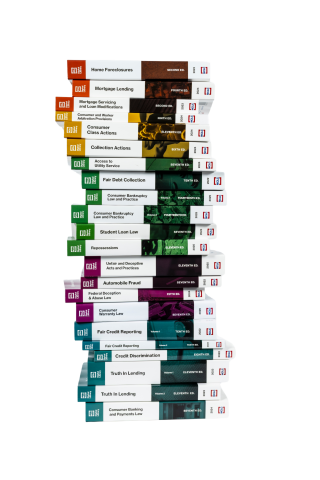
The first chapter of each consumer law treatise is available for free in NCLC's Digital Library.
Click any NCLC title below to start reading now:
Debtor Rights
Fair Debt Collection
Consumer Bankruptcy Law and Practice
Student Loan Law
Repossessions
Access to Utility Service
Mortgages & Foreclosures
Mortgage Lending
Mortgage Servicing and Loan Modifications
Home Foreclosures
Deception & Warranties
Unfair and Deceptive Acts and Practices
Federal Deception Law
Automobile Fraud
Consumer Warranty Law
Credit & Banking
Fair Credit Reporting
Truth in Lending
Consumer Credit Regulation
Credit Discrimination
Consumer Banking and Payments Law
Consumer Litigation
Collection Actions
Consumer Class Actions
Consumer Arbitration Agreements