
Americans now own more than $35 trillion in home equity. Home equity, like any other valuable property, attracts thieves. Past home equity theft schemes focused on homeowners facing foreclosure. NCLC’s Home Foreclosures Chapter 17 describes the foreclosure rescue scams that proliferated in the wake of the Great Recession’s foreclosure crisis.
Increased property values attract new forms of home equity theft. A recent NCLC article describes the growth in Home Equity “Investment” (HEI) loans—HEI transactions are high-cost loans disguised as “investments,” where the investment nomenclature seeks to evade consumer laws applying to mortgage lending.
This article describes three other emerging home equity theft schemes; the first is new and the latter two are refinements of scam techniques that have been around for decades:
- The MV Realty model: recording a lien that commits a homeowner to use a specific real estate listing service;
- The We Buy Houses model: high-pressure home sale campaigns; and
- The sale-leaseback model: disguised sale transactions structured around a deceptive repurchase option.
These new equity theft stratagems use sophisticated technology to target vulnerable homeowners. Scammers attract millions of dollars in private equity funding. The enterprises operate on a national scale but, to interact directly with targeted homeowners, they rely on franchisees working under incentive systems that reward overreaching. At the same time, company owners and investors deny any systemic problems, blaming a few local “bad apples.”
Scammers target the elderly, particularly those living in gentrifying neighborhoods. Individuals with mental impairments are particularly susceptible. Scammers also seek out homeowners in financial distress, targeting those facing code enforcement, tax sales, and major repair emergencies. A death in the family, divorce, or a tangled title dispute can be magnets for scammers.
Home equity theft can be disastrous not only for the individuals involved, but for entire communities. Cutting off inter-generational transfers of wealth has a particularly severe impact on Black, Latino, and immigrant communities, as well as other historically marginalized groups. Large-scale transfers of homes to investors diminishes the share of homes remaining for families to own and occupy.
The MV Realty Model: Loans Disguised as Long-Term Real Estate Listing Agreements
—The Practice Described
One method to extract home equity is to record a lien on a home that allegedly secures a future contract to act as the homeowner’s realtor. The homeowner receives a small up-front payment in consideration for signing the contract, and if they fail to use this company as their realtor for any sale or transfer in the next forty years, a termination fee is charged of roughly ten times the up-front payment. Litigation involving these schemes has focused on MV Realty. See NCLC’s Home Foreclosures § 17.2.6a.
MV Realty has aggressively marketed what it called a “Homeowner Benefit Agreement” (HBA). Upon execution of an HBA, MV Realty gives the homeowner a cash payment, called a “promotion fee,” ranging from several hundred to several thousand dollars. See Complaint, Florida ex rel. Moody v. MV Realty PBC, L.L.C. (Fla. Cir. Ct. Nov. 29, 2022) (Florida AG complaint against MV Realty; average promotion fee was $789.59, set at 0.3% of the home’s value). Homeowners are told that they do not have to pay the money back. According to MV Realty’s marketing pitch, all the HBA requires a homeowner to do is to promise to use MV Realty as the listing agent should they ever decide to sell the property. See Order Granting Summary Judgment for Plaintiffs, Florida ex rel. Moody v. MV Realty PBC, L.L.C., at 6 (Fla. Cir. Ct. Sept. __, 2024) (Florida court order against MV Realty).
According to several state attorneys general investigations, homeowners sign on to MV Realty’s HBA without a clear understanding of key aspects of the transaction. See California ex rel. Bonta v. MV Realty PBC, L.L.C., Case No. 23STCV30464, at 36 (Cal. Super. Ct. Sept. 13, 2024) (California court order against MV Realty); Order Granting Summary Judgment for Plaintiffs, Florida ex rel. Moody v. MV Realty PBC, L.L.C., at 4–5 (Fla. Cir. Ct. Sept. __, 2024) (Florida court order against MV Realty); State ex rel. Stein v. MV Realty PBC, L.L.C., 2023 WL 5658892, at *20–21 (N.C. Super. Ct. Aug. 30, 2023), reconsideration denied, 2023 WL 7040549 (N.C. Super Ct. Sept. 13, 2023).
MV Realty records a memorandum of the agreement that operates as a lien on the property, claiming that its interest runs with the property for the forty-year life of the HBA. The document obligates the homeowner to pay a significant penalty to satisfy the lien in the event the homeowner seeks to encumber the property, such as through a reverse mortgage or refinancing. Any transfer of the property, including through death of the homeowner, triggers the penalty. The penalty amount is set to, at a minimum, three percent of the property’s value as of the date the HBA was executed, easily running to ten times the cash incentive payment MV Realty gave the homeowner upon execution of the HBA.
As an alternative to payment of the penalty, a homeowner can list the property with MV Realty as the sales agent with a commission fee essentially as burdensome as the penalty. Many state attorneys general alleged that MV Realty seldom had qualified staff to perform the services of a real estate listing agent, and that the company’s goal was to harvest penalties, not act as a real estate agent.
In a Florida enforcement proceeding the court found (at page 4) that between 2018 and 2023, MV Realty harvested $18,434,805 in “early termination fees” from consumers, and in 2023 these penalty fees represented 57% of the company’s revenue. In effect, HBA transactions are high-cost loans. The penalties are the repayment of the initial cash incentive payment plus an exorbitant finance charge.
—State Enforcement Proceedings Against MV Realty
MV Realty began to market its HBA in 2018. During the COVID pandemic, the operation expanded into 33 states. Simultaneously with this growth, state attorneys general began to respond to a slew of consumer complaints and commenced investigations into the company. See NCLC’s Home Foreclosures § 17.2.6a.
Facing enforcement proceedings in ten states, MV Realty in September 2023 filed for chapter 11 bankruptcy relief, acknowledging that its reason for filing bankruptcy was to avoid state enforcement proceedings. Had the bankruptcy case proceeded, MV Realty’s plan would have cut off legal rights of the 90% of HBA signatories who did not have access to the legal resources needed to participate in a complex chapter 11 case. Any benefit from the bankruptcy would likely have gone to the private equity firm investors who bankrolled MV Realty with full knowledge of its practices.
The automatic stay does not bar state enforcement actions, and bankruptcy court denied MV Realty’s motion to stay the government enforcement actions. In re MV Realty PBC, L.L.C., 658 B.R. 194 (Bankr. S.D. Fla. 2024). State attorneys general, the US Trustee, and NCLC filed briefs asking for dismissal of the chapter 11 case, and in May 2024 MV Realty agreed to dismiss the bankruptcy, allowing state attorneys generals to proceed with enforcement actions seeking cancellation of the liens and return of penalties to victims.
State attorneys general have raised several legal claims against MV Realty. See Complaint, Georgia ex rel. Carr v. MV Realty PBC, L.L.C. (Ga. Super. Ct. Jan. 30, 2024) and Complaint, Florida ex rel. Moody v. MV Realty PBC, L.L.C. (Fla. Cir. Ct. Nov. 29, 2022), where the attorneys general asserted violations of state unfair and deceptive acts and practices (UDAP) laws. Attorneys general have alleged that in advertising and direct communications with homeowners, MV Realty’s local agents either did not disclose or misrepresented critical aspects of the HBA transactions. These included the forty-year term of the obligation, the recording of a lien against the home, and the impact of the lien as a forty-year cloud on title.
In certain states, liens to secure payment for personal services cannot lawfully be recorded against real property. See State ex rel. Stein v. MV Realty PBC, L.L.C., 2023 WL 5658892, at *17 (N.C. Super. Ct. Aug. 30, 2023), reconsideration denied, 2023 WL 7040549 (Sept. 12, 2023). MV Realty ignored these limitations and proceeded to compel payment of penalties by refusing to release their liens and threatening lawsuits against homeowners.
Several state attorneys general raised claims that MV Realty was offering to provide real estate agent services through individuals who were unlicensed and unqualified to perform these functions. See Complaint, California ex rel. Bonta v. MV Realty PBC, L.L.C. (Cal. Super. Ct. Dec. 13, 2023). Several attorneys general asserted violations of telemarketing laws. Id. Certain attorneys general complaints argued that the HBAs qualified as disguised loans, and MV Realty structured the transactions to evade laws that regulate lenders. Id.
Ultimately California, Colorado, Florida, Georgia, Indiana, Massachusetts, Minnesota, Missouri, New Jersey, North Carolina, Ohio, and Pennsylvania attorneys general commenced enforcement proceedings against MV Realty over its HBA scheme. Courts entered preliminary orders against the company in Massachusetts, North Carolina, California, Florida, and Georgia.
Relief under the court orders has included prohibitions on enforcement of the HBA agreements as liens, requiring MV Realty to cancel the liens, bars on demands for payment of penalties and fees, and bans on solicitation for new agreements. Courts in California and Georgia ordered MV Realty to remove its clouds on titles. Other courts directed MV Realty to pay restitution and penalties.
Most recently, on December 18, 2025, the Florida Attorney General announced a final consent judgment against MV Realty for deceiving Florida homeowners. The final ruling requires MV to remove liens from over 9,000 Florida homes and pay $3 million by June 30, 2026. Failure to comply by the deadline entitles the state to collect an $18,000,000 judgment (representing $6 million in disgorgement for ill-gotten gains, $10 million in civil penalties, and $2 million in attorney fees and costs). The Florida judgment enjoins MV Realty from engaging in its HBA scheme in the state.
—State Laws Prohibiting Non-Title Recorded Agreements for Personal Services
State or local laws can be effective in curbing abusive practices like those of MV Realty. The American Land Title Association (ALTA) has actively lobbied for adoption of state laws that restrict what it calls “non-title recorded agreements for personal services” (NTRAPs). ALTA recommends state legislation should prohibit agreements that bind a consumer to use a particular service provider and purport to treat the agreement as creating an interest in real property. Such an agreement should not be recordable in land records or purport to bind future owners of a property. State or local laws can bar the recording of such agreements entirely or limit their duration, for example to one year. With the New York’s Governor’s approval of an NTRAP statute in December 2025, thirty-three states have now enacted laws that regulate the practice.
The “We Buy Houses” Model: High-Pressure Home Sales
—The Model Explained
The “We Buy Houses” model seeks to tap into not just a portion, but all of a homeowner’s equity. Businesses that engage in high-pressure tactics to induce the homeowner to sell their home for far less than its fair market value now operate on a national scale. They directly solicit homeowners to enter sales contracts without the home ever being listed publicly, exaggerating the difficulty of working with a realtor, and downplaying what the home is worth.
The business model of soliciting a direct purchase of someone’s home is widespread. Several companies operate on a national or regional scale. One of the most prolific is HomeVestors of America, owned by Bayview Asset Management. HomeVestors operates through more than one thousand local affiliates in forty-eight states. Affiliates pay fees to HomeVestors to use the company’s logo, “We Buy Ugly Houses,” and benefit from HomeVestors’ specialized marketing techniques with its familiar caveman and yellow billboards.
The parties engaging in high-pressure home purchases typically do not buy houses to “flip” them—that is renovate and resell for a profit. Instead, they obtain a homeowner’s signature on a purchase and sale agreement that sets a sale price well below the property’s market value, and then “wholesale” the contract by assigning it to an investor who then owns the property or resells it. The homeowner’s initial “buyer” is a home “wholesaler” looking for a quick turnover of the home’s purchase rights to an investor and a cut in the profits from the overall transaction.
Wholesalers need to find financially vulnerable homeowners who have equity in their homes. Aggressive marketing is critical. In addition to billboard ads, postcards, and barrages of unsolicited calls and texts, wholesalers are encouraged to build “relationships” with nursing homes and probate attorneys. They follow up on leads gathered from records of deaths and divorces. They search neighborhoods for homes showing signs of distress. Elderly or mentally impaired homeowners are particularly susceptible to high-pressure sale abuses. Tangled title disputes can provide critical leverage. The common tactics of high-pressure home sale scammers are discussed in NCLC’s Home Foreclosures § 17.2.5.1.
Misrepresentation and coercion are key elements of high-pressure home sales. Misrepresentations involve the home’s true value, the legal effect of the papers the homeowner is asked to sign, and the price the homeowner might receive through a publicly listed sale. Coercion comes into play when homeowners realize they signed papers agreeing to sell the home at a price well below its fair market value, such as when family members intervene and demand cancellation of the sale agreement. A wholesaler’s lawsuit to compel specific performance is one form of coercion. Another is to record the sale agreement in the deed records to cloud title and preclude a sale to anyone else.
A Pro Publica investigation into HomeVestors’ practices from 2023 to 2025 produced examples of the abusive tactics of the company’s franchisees. In one case, a representative from HomeVestors’ most successful California franchise persuaded a seventy-two-year-old woman suffering from dementia to sell her mortgage-free home of thirty-eight years. County code enforcement officers had inspected her home, identified a hoarding problem, and referred her to services for assistance with her problem. Nevertheless, a HomeVestors’ representative told her that she faced eviction by county officials, but if she sold the property to him, he would help her with the code enforcement problems. She sold her home, valued at $608,000, to HomeVestors for $300,000.
When the homeowner learned later that the county had no intention of evicting her and only wanted to refer her for services, she demanded cancellation of the sale. HomeVestors responded by filing a lawsuit to enforce the sale agreement. The franchisee eventually pleaded guilty to felony counts of attempted grand theft of real property. Despite these incidents, the local agent remained associated with HomeVestors’ successful California franchise. The homeowner eventually prevailed in defending herself against HomeVestors’ aggressive litigation demands but suffered a mild stroke in the process.
—Legal Claims to Counter High-Pressure Home Sales
Legal claims to counter high-pressure home sales vary depending on whether the sale went to closing. Before closing, homeowners can assert claims of fraud and unfair and deceptive practices, focusing on the disparity between the sale price and the property’s fair market value. In certain states, homeowners may bring similar claims to set aside a completed sale using a state foreclosure rescue statute. Legal claims to challenge high-pressure home sales are discussed in NCLC’s Home Foreclosures § 17.2.5.2.
Depending on the availability of exemptions, bankruptcy may also be appropriate for setting a transfer aside or rejecting an executory contract such as a purchase and sale agreement. Homeowners may face additional difficulties if a third-party bona fide purchaser has acquired the property. However, there are important exceptions to the bona fide purchaser protections. How to deal with the bona fide purchaser defense in the context of home equity theft scams is discussed in NCLC’s Home Foreclosures § 17.4.1.3.
State and local laws also may address the abuses, such as provisions for a cooling-off period after the signing of a purchase and sale agreement that did not arise from a public listing. State and local laws can limit solicitation of homeowners and provide meaningful penalties for violations of do-not-solicit notices. They can mandate disclosures and define unfair and abusive practices in connection with wholesale transactions. State licensing of wholesale home buyers provides a mechanism for oversight and for review of consumer complaints. Some states clearly provide that wholesaling transactions are covered by their UDAP statute. See NCLC’s Unfair and Deceptive Acts and Practices § 2.2.4.15.
63 Pa. Cons. Stat. § 455.610, effective January 2025, requires that wholesalers, when a purchase and sale agreement is executed, give homeowners notice of a right to cancel the transaction without cost or penalty for thirty days or until closing, whichever is earlier. If the wholesaler does not provide the notice, the cancellation right continues until a conveyance. Prior to adoption of the Pennsylvania statute, Philadelphia enacted a series of ordinances addressing the conduct of residential real property wholesalers.
A 2024 ordinance authorized establishment of a “no solicitation” list to deter aggressive wholesalers. See Phil. Code. § 9-1108(2). An earlier Philadelphia ordinance, Phil. Code. § 9-5201, set up a licensing system for real property wholesalers, defined as “[a]ny person or entity who is in the business of purchasing or soliciting for purchase Residential Properties, not to use as their residence.” The definition excepts those who substantially rehabilitate a property before a resale, certain individuals acting in a governmental capacity, and certain licensed professionals. Wholesalers licensed under the ordinance are subject to prohibitions on misleading conduct and must make specified disclosures.
Oklahoma has also enacted a law requiring licensing of wholesalers. See 59 Okla. Stat. § 858-314. State and local laws aimed at curbing high-pressure home sales are summarized in NCLC’s Home Foreclosures § 17.2.5.3.
The Sale and Leaseback Model: Equity Theft Disguised as a Home Equity Loan
In the old foreclosure rescue model, as discussed in NCLC’s Home Foreclosures § 17.2.2, scammers often used sale-leaseback transactions to take title to homes facing foreclosure. With rising property values, scammers now use similar stratagems to snatch title from homeowners who are not facing foreclosure and are even current on their mortgages or own the property free and clear.
Cash poor and equity rich homeowners have become magnets for scammers who offer loan products structured around a predatory sale-leaseback transaction. Preferred targets do not qualify for standard home equity loans because they have insufficient income or bad credit. According to one report, “EasyKnock knows its clients are those whose financial situations prevent them from qualifying from traditional financing.” At the same time, the homeowners face such financial pressures as urgently needed home repairs, property tax arrearages, a divorce, or a death in the family.
A company known as “EasyKnock” has used sale-leaseback transactions extensively to acquire title to homes. From 2016 through 2024 EasyKnock operated its “sell and stay” program in fifty states. The company characterized itself as a “real estate technology company.”
In a 2018 interview, EasyKnock’s founder and CEO Jarred Kessler observed that “[t]he addressable market for ‘sell and stay’ is $2.6 trillion” and a recent influx of private equity capital “will enable us to expand our footprint and provide homeowners the flexible options they need.” According to Kessler, EasyKnock’s expansion would take place in the context of “an explosion in single-family rentals in the United States and a huge hole for homeowners unable to release equity out of their home.” In other words, sale-leaseback transactions would fuel the growth of investor-owned, single-family rental homes. EasyKnock would help these homeowners “release equity” from their homes.
According to its ads, EasyKnock offered an alternative source of quick cash for homeowners who could not qualify for traditional home equity loans. Homeowners who responded to EasyKnock’s solicitations signed a conveyance of their home’s title to EasyKnock, and a lease agreement to become EasyKnock’s tenant. With the lease, the former homeowner signed a document giving them an option to buy back the property subject to a formula that sets the future repurchase price.
The terms of the EasyKnock lease and repurchase option set the stage for the former homeowner’s eviction as a tenant unable to pay the rent. The lease terms were onerous. The monthly rent was based on a percentage of the loan cost to EasyKnock, not on market rents, and increased over time. Repurchase was unlikely because the repurchase-option price included exorbitant fake closing costs, potentially amounting to tens of thousands of dollars. The repurchase-option price also increased over time. An NPR investigation “found that these deals cost some people tens of thousands of dollars in equity and that the vast majority of people do not buy their houses back.”
Homeowners who signed off on EasyKnock’s “sell and stay” documents were likely to believe they would be paying off a loan secured by a portion of their home equity. See Michigan Attorney General Notice of Intended Action to EasyKnock (May 20, 2024). Instead, they had transferred 100% of their home equity to EasyKnock. They could recover ownership only by paying an unaffordable repurchase price. EasyKnock’s customer selection criteria essentially excluded consumers who would have access to conventional financing for a repurchase transaction.
By the end of 2024, EasyKnock faced civil inquiries from attorneys general in Connecticut, Massachusetts, and Michigan. The company agreed to cease soliciting for the “sell and stay” program in Massachusetts and paid a civil penalty. In addition, the company faced more than two dozen lawsuits around the country, including Truth in Lending Act (TILA), UDAP, state usury, state broker and licensing law claims, as well as claims for equitable mortgage, unjust enrichment, and fraud. EasyKnock abruptly announced the cessation of its business in December 2024.
Much of the EasyKnock litigation hinges on the argument that the transaction constitutes a disguised loan, with the re-purchase price acting as a finance charge. Based on this analysis, these transactions nearly always qualify as a high-cost mortgage under the Home Ownership and Equity Protection Act (HOEPA). In addition, if the transaction qualifies as a residential mortgage, the TILA ban on binding arbitration should apply. See NCLC’s Truth in Lending § 12.7.2.3 (mentioning EasyKnock case, Chlarson v. EKRE).
Recognizing Common Features of Today’s Home Equity Theft Scams
Use of technology in marketing. Attorneys general and consumer attorneys frequently point out how the new breed of home equity scammers use sophisticated technologies to market their products. Scammers rely on social media analytics to target homeowners. They position themselves to appear in Google searches triggered by terms associated with financial distress. They direct millions of telemarking calls relying on databases prepared specifically for their target groups. They target individuals looking for loans. Discovery into a company’s marketing technology can show the true goals and intent driving a company’s business model. See NCLC’s Home Foreclosures § 17.3.2.2.2.
Pitches to private equity investors show the company’s real game plan. Scammers often market their products as something other than a loan. MV Realty tells consumers they may never have to pay back the “promotion fee” they receive upon agreeing to a lien placed on their homes. But MV Realty’s pitch to investors is that its “homeowner benefit agreements” create an obligation to repay and that MV Realty has devised a system to maximize its leverage to compel repayment. It thus pays to review a company’s pitches to its largest funders. Funders directly involved in starting up the enterprise may also be potential defendants.
Reliance on local agents/franchisees creates plausible deniability for the parent corporate entity, its officers, and investors. Large-scale home equity theft scammers often operate through local franchises or agents tasked to do whatever it takes to get consumers’ signatures on documents.
A national organization engaging in systemic home equity theft and confronted with a case of overreach will typically call this an isolated incident and announce that it will implement a policy to curb such behavior. In reality, local agents are subject to little or no oversight, which is key to the success of a home equity scam operating on a national or regional scale.
The local representatives are paid only when a consumer signs an agreement. The national organizations impose quotas of telemarketing calls per hour, a practice that incentivizes abusive practices.
In litigation it can be helpful to focus discovery on the relationship between the national organization and local agents. Franchise agreements, supervision plans, and records of how the parent company handled consumer complaints can counter the “it was just a bad apple” argument.
Confusion whether a transaction is a loan. Homeowners who executed HomeVestors’ sale documents typically responded to solicitations targeting homeowners looking for home equity loans. When homeowners sign contracts with HomeVestors, they often believe they are taking out loans secured by a portion of their home equity, instead of selling their homes. On the other hand, MV Realty solicits homeowners by offering them a cash “promotion fee” with homeowners not realizing they will likely have to repay far more than the fee. In most cases, scammers structure a transaction to evade consumer credit legislation. Scammers characterize their products as new or “innovative.” The only innovative thing is that the products involve new ways to deceive consumers.
Targeting vulnerable homeowners. A California attorney general complaint, at ¶ 133, notes that elderly homeowners were more susceptive to MV Realty’s practices “because of age, poor health, infirmity, and impaired understanding than younger consumers.” See also California ex rel. Bonta v. MV Realty PBC, L.L.C., Case No. 23STCV30464, at 31 (Cal. Super. Ct. Sept. 13, 2024) (finding MV Realty’s online marketing and advertising used key words such as “grants for disabled homeowners” and “federal grants for seniors”). Home equity scammers seek out homeowners with mental impairments. Targeting homeowners who are elderly, disabled, or who live in specific neighborhoods can trigger liability under civil rights laws and other laws designed to protect the elderly from financial abuse.
Legal Claims to Fight Home Equity Theft
State UDAP Statutes. State unfair and deceptive acts and practices (UDAP) statutes offer a range of effective remedies to deal with home equity theft. Intent and reliance requirements are less stringent under UDAP laws than for common law fraud. Deception and unfairness inherent in home equity theft is often readily apparent. Check each state’s UDAP law for exemptions applicable to certain types of transactions and for pre-suit notice requirements. The application of UDAP laws to home equity theft scams is discussed in NCLC’s Home Foreclosures § 17.4.5.
Equitable Mortgages. Conveyance of title subject to a repurchase option should be treated as a loan secured by the property. The homeowner often intended to enter into a loan agreement, and the scammer structured communications to encourage this belief. In the event of a default in lease payments due in a sale-leaseback with a repurchase option, state laws applicable to foreclosure should apply, not landlord/tenant eviction procedures. Factors determining whether a sale-leaseback is an equitable mortgage are discussed in NCLC’s Home Foreclosures § 17.4.1.2.
Truth in Lending Act (TILA). A loan disguised as a sale-leaseback is subject to TILA and state equivalents. The same applies for exclusive listing agreements where the homeowner receives a cash sign-up bonus, an amount that must be repaid together with additional charges to clear the creditor’s lien. TILA generally applies when a transaction involves an agreement to incur debt and deferment of its repayment. 15 U.S.C. § 1602(f). Scammers go to great lengths to use language about “innovation” to confuse consumers and regulators about a transaction that creates debts and anticipates repayment. TILA coverage activates important consumer protections, including disclosure of the finance charge, and in certain cases triggers a right of rescission. The application of TILA to equity theft scams is discussed in NCLC’s Home Foreclosures § 17.4.2.
State Usury Acts. Home equity theft transactions are usually so one-sided that, once properly characterized as loans with a finance charge, they likely violate state usury limits. State statutory interest rate caps vary in their application to types of loans and creditors, so each state’s statutory scheme must be reviewed. The role of state usury statutes in combatting equity theft schemes is discussed in NCLC’s Home Foreclosures § 17.4.9.
State Licensing Laws for Real Estate Professionals and Lenders. Licensing requirements may apply to certain players involved in home equity theft schemes. State attorney general enforcement proceedings against MV Realty included claims that the transactions were unlawful attempts to sell real estate listing services to be performed by unlicensed individuals. If a home equity theft scheme can be characterized as a loan, licensing requirements for high-cost lenders may also come into play. See NCLC’s Home Foreclosures § 17.4.9.3.
Common Law Fraud; Civil Conspiracy. The stratagems described in this article rely on false or misleading representations to induce homeowners to convey an interest in property to the scammer. The traditional elements of fraud are a false representation, scienter (making the representation recklessly or with knowledge of its falsity), the defendant’s intent that the representation be relied upon, reasonable reliance, and damages resulting from the reliance. Punitive damages and damages for emotional harm are typically allowed as fraud remedies. Consumers may be able to reach a wide range of defendants under a civil conspiracy theory aligned with the fraud claims. Fraud claims against home equity theft scammers are covered in NCLC’s Home Foreclosures § 17.4.7.
Unconscionability. The grossly excessive disparity between the true value of a property transferred in an equity theft scam and any homeowner benefit supports an unconscionability claim under most state laws. Distinct unconscionability claims involve both procedural unconscionability (the circumstances surrounding formation of the deal) and substantive unconscionability (the one-sided harshness of the contract terms). Unconscionability is often raised defensively, to oppose enforcement of a contract, but the concept is also embedded in certain state UDAP and foreclosure rescue scam statutes. Use of the unconscionability doctrine in the equity theft context is discussed in NCLC’s Home Foreclosures § 17.4.8.2.
State Foreclosure Rescue Statutes. Many states have enacted statutes specifically addressing abuses by those who offer to help homeowners in default on their mortgages or property tax obligations. Statutes may regulate fees and prohibit these service providers from acquiring any interest in the property or engaging in unfair and deceptive practices. Most statutes provide a right to cancel contracts with the service provider and a punitive damages remedy. State statutes regulating providers of foreclosure rescue services are summarized in NCLC’s Home Foreclosures § 17.4.6.
Home Solicitation Laws. Home equity scammers rely heavily on solicitations made directly to homeowners. Many state statutes and an FTC rule give consumers the right to cancel certain types of contracts that are solicited outside of the seller’s place of business. The state statutes typically require a notice of the right to cancel, with the cancellation right extended if the notice is not given. Under certain state statutes, coverage issues may arise with respect to real estate transactions, but transactions involving long-term service contracts likely qualify. Violations of home solicitation statutes may also serve as the basis for UDAP claims that provide additional remedies. A summary of relevant state home solicitation statutes appears in NCLC’s Home Foreclosures § 17.4.10.2.
Telemarketing Rules and Statutes. Many scammers engage in telemarketing, often buying collections of phone numbers filtered for homeowners likely to be in financial distress. The FTC Telemarketing Sales Rule defines unfair and abusive telemarketing practices and there is a private right of action if damages exceed $50,000. See NCLC’s Federal Deception & Abuse Law § 5.6. Violations may also be per se UDAP violations (see, e.g., Ga. Code Ann. § 10-1-393.5(b)) or actionable under a state telemarketing statute. Several state attorneys general analyzed data on MV Realty’s extensive use of telemarketing and raised telemarketing law violations in their complaints against the company. See Complaint, California ex rel. Bonta v. MV Realty PBC, L.L.C., at ¶¶ 116–122 (Cal. Super. Ct. Dec. 13, 2023); Complaint, Florida ex rel. Moody v. MV Realty PBC, L.L.C., at ¶¶ 74–85 (Fla. Cir. Ct. Nov. 29, 2022); Complaint, Georgia ex rel. Carr v. MV Realty PBC, L.L.C., at ¶¶ 66–98 (Ga. Super. Ct. Jan. 30, 2024).
Thus, a Florida court, at 6–7, found that several of MV Realty’s telemarketing practices were misleading and deceptive under federal and state standards, including calling millions of consumers on do-not-call lists without their consent, disguising the origin of the calls, and misrepresenting material information about MV Realty’s product in the course of calls.
Elderly and Disabled Persons Abuse Prevention Acts. Several states have enacted statutes that provide remedies for financial abuse of elderly or disabled consumers. Certain UDAP statutes also provide for enhanced penalties when the victim is elderly or disabled. See, e.g., Fla. Stat. § 501.2077 ($15,000 penalty per UDAP violation against seniors, the disabled, veterans, or military servicemembers); Ga. Code Ann. § 10-1-851 (authorizing additional penalty of $10,000 per UDAP violation for elderly or disabled victims); NCLC’s Unfair and Deceptive Acts and Practices § 13.6.3.7.
Bankruptcy Solutions for Homeowners. If a consumer is facing imminent eviction or foreclosure as the result of a home equity theft scheme, the bankruptcy automatic stay offers immediate protection. Bankruptcy also offers the potential for setting aside transfers of a debtor’s property interests for less than fair market value if the transfers occurred within certain time frames before the bankruptcy filing.
The bankruptcy trustee can exercise these avoidance powers to set aside a sale-leaseback transaction. See In re Allen, 2024 WL 2931038 (Bankr. D. Conn. June 10, 2024) (setting aside EasyKnock “sell and stay” transaction as fraudulent transfer). In certain circumstances the debtor can exercise the bankruptcy trustee’s avoidance powers. This may involve convincing the bankruptcy court that the transfer was involuntary. See NCLC’s Home Foreclosures § 17.5.3.3.4.
Before committing to any bankruptcy option, review the extent of applicable exemptions for homestead interests and any limits on the ability of a debtor to claim exemptions arising from the avoidance process in bankruptcy. These issues are discussed in NCLC’s Home Foreclosures § 17.5.3.3. If the transfer of the property through an equity theft scheme is not yet complete, the homeowner can reject the contractual obligation in a chapter 13 bankruptcy case, leaving the creditor with an unsecured claim. See NCLC’s Home Foreclosures § 17.5.3.5.
Responding to a Scammer Filing for Bankruptcy. Home equity theft scammers may file for bankruptcy, particularly when thinly capitalized from the start, or to fend off litigation brought by government agencies or consumers. Although consumer litigation will be subject to the automatic stay, debts owed to consumers arising from equity theft scams are likely to be nondischargeable in a chapter 7 or chapter 11 case filed by an individual scammer. However, consumer creditors must seek a court declaration of nondischargeability of this debt during the bankruptcy case. See NCLC’s Consumer Bankruptcy Law and Practice § 17.5.4. Strategies for prioritizing consumer creditors’ rights to payment in chapter 11 cases are discussed in NCLC’s Consumer Bankruptcy Law and Practice § 17.5.
Enforcement proceedings brought by states to enforce consumer protection laws are not subject to the automatic stay, and these proceedings can continue to judgment despite a pending chapter 11 case. NCLC’s Consumer Bankruptcy Law and Practice § 17.3.2. Consumers may be better off moving to have a scammer’s chapter 11 case dismissed or converted to chapter 7 if it was filed in bad faith, particularly when a solvent company filed for bankruptcy relief for no legitimate reorganization or liquidation purpose. Id. § 17.7.14. As discussed above, after MV Realty filed for chapter 11 bankruptcy relief the trustee and injured consumers sought dismissal of the case. The company then voluntarily dismissed the chapter 11 proceeding.
Avoiding arbitration. The Truth in Lending Act (TILA) bars arbitration clauses in residential mortgage loan transactions.15 U.S.C. § 1639c(e). See NCLC’s Truth in Lending § 12.7.2.3 and NCLC’s Mortgage Servicing and Loan Modifications § 11.9.3. Equity theft scammers claim the TILA provision does not apply because the transaction does not involve mortgage credit. The homeowner can thwart this tactic by showing that the transaction is an equitable mortgage or otherwise involves an extension of credit secured by the borrower’s residence.
Courts reached conflicting interpretations regarding the enforcement of arbitration clauses included in some of the sale-leaseback documents drafted by EasyKnock. Compare Baskin v. EK Real Estate Services, NY, L.L.C., 2022 WL 17742738 (E.D. Tex. Sept. 14, 2022) (enforcing arbitration provision’s delegation clause where plaintiff focused his attack on the primary arbitration clause, not the delegation clause), with Bernat v. EK Real Estate Fund I, L.L.C., 2024 WL 4534474 (Ohio Ct. App. Oct. 17, 2024) (refusing to compel arbitration where the arbitration clause appeared only in the EasyKnock repurchase-option contract and homeowner was not seeking to enforce the option). Where an arbitration provision includes a clause delegating to the arbitrator questions of the arbitration provision’s enforceability, the consumer should argue that TILA prohibits the delegation clause. Then the court can find that TILA prohibits the main arbitration provision. See NCLC’s Home Foreclosures § 17.4.2.1.


Related Publications
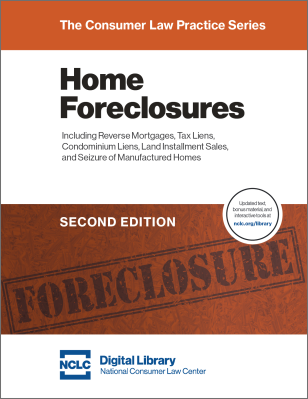
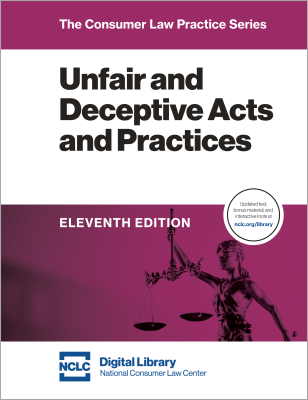

Free First Chapters
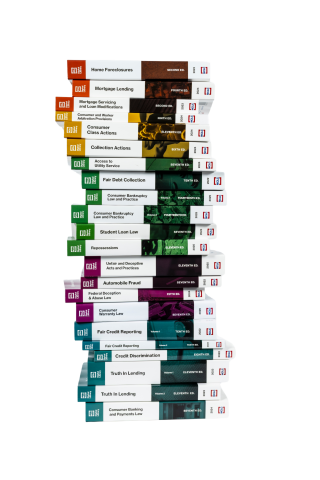
The first chapter of each consumer law treatise is available for free in NCLC's Digital Library.
Click any NCLC title below to start reading now:
Debtor Rights
Fair Debt Collection
Consumer Bankruptcy Law and Practice
Student Loan Law
Repossessions
Access to Utility Service
Mortgages & Foreclosures
Mortgage Lending
Mortgage Servicing and Loan Modifications
Home Foreclosures
Deception & Warranties
Unfair and Deceptive Acts and Practices
Federal Deception Law
Automobile Fraud
Consumer Warranty Law
Credit & Banking
Fair Credit Reporting
Truth in Lending
Consumer Credit Regulation
Credit Discrimination
Consumer Banking and Payments Law
Consumer Litigation
Collection Actions
Consumer Class Actions
Consumer Arbitration Agreements