
This article provides tips for assisting clients struggling with debt incurred by an abusive partner through identity theft or coercion (coerced debt). While focusing on advice for survivors of domestic violence, similar advice may apply to survivors of human trafficking, elder abuse, abuse by caretakers for persons with disabilities, and foster parent abuse targeted at foster youth. More detail on coerced debt is found in NCLC’s just-released 2026 edition of Surviving Debt Chapter 21 (free online; inexpensive print books available) and NCLC’s Collection Actions § 12.3 (free online).
What Is Coerced Debt?
Coerced debt is any non-consensual credit-related transaction that occurs within the context of an abusive relationship. Because coerced debt is non-consensual, it can look like identity theft—an abusive partner uses the survivor’s personal information to incur debt in the survivor’s name for the abuser’s use without the survivor’s knowledge or permission. This form of coerced debt occurs when an abuser opens credit card or cell phone accounts, takes out automobile or home loans, or even files fraudulent tax returns that can be done online without the need of a physical appearance.
Coerced debt also includes other forms of non-consensual credit transactions that do not look like identity theft. An abusive partner may utilize the threat of physical, emotional, psychological, or financial harm to the survivor, their children, other family members, pets, or even to the abuser themselves to manipulate, intimidate, or force a survivor to incur debt or provide access to assets, such as a credit card, bank account, or other assets.
Severe Consequences of Coerced Debt
The impact of coerced debt on survivors is devastating. Perpetrators of abuse use coerced debt to gain financial control over survivors’ current and future economic choices. Many survivors do not discover unknown coerced debt accounts until after they have been placed for collection and their credit record has already been damaged. Because credit reports are routinely used by creditors, potential employers, and landlords to make determinations about an applicant, survivors have difficulties obtaining resources such as housing, employment, utilities, and insurance.
Additionally, survivors are often unable to obtain credit from traditional lenders and some are driven to borrow from predatory sources such as payday lenders or utilize other unsafe online lending products. These high-cost loans aggravate an already desperate financial situation, trapping survivors in insurmountable debt and exposing them to increased risk of violence. Survivors become effectively trapped within their abuser’s financial sphere, making it nearly impossible to leave the abusive relationship.
Moreover, survivors of domestic violence are apt to stay in abusive relationships if ending the relationship would result in poverty or homelessness. If children are involved, survivors are even more prone to stay in an abusive relationship to shield their children from economic instability. When survivors do manage to separate from their abusive partners, the economic impacts of coerced debt further impoverish survivors while the separation itself leaves them vulnerable to increased risk of violence.
A Safety Plan as an Immediate Priority
Because coerced debt is often linked to physical domestic violence, the first step in advising survivors is to ensure their safety and that of other family members.
A client should always develop a safety plan. Help is available from the National Domestic Violence hotline.
Discuss with the client whether any of the advice you may provide puts them at risk of retaliation by their abusive partner, such as when a client submits an identity theft report to the police naming the abusive partner, takes funds from a bank account, or closes a credit card account.
Documenting Coerced Debt
Almost any action a client could take to deal with coerced debt requires documentation of the coercion or identity theft. If the coerced debt resulted from identity theft, the client can file an identity theft report with the FTC at www.idtheft.gov. Normally, an identity theft report to the FTC is the safest choice because there is no likely direct investigation of the abuser or contact with the abuser. If safe to do so, the client can also make an identity theft report with the local police department or the police where the identity theft took place, including submission of the FTC identity theft report, a copy of the client’s credit report, and any billing statements or other information about the coerced debt.
If a visit to the police is intimidating, the client could be accompanied by a domestic violence advocate. Some police departments allow the client to file the report online or over the phone, without having to meet with the police in person. The police may allow representatives to help non-English speakers make the report over the phone. The client should request multiple copies of the report generated by the police—keeping at least one and sending one to each of the three major national credit bureaus (as discussed below).
In all states except Texas (See Tex. Penal Code § 32.51 (West); Tex. Bus. & Comm. Code § 521.051 (West)), if the debt was incurred through coercion rather than identity theft, a client cannot get the documentation available to victims of identity theft. Instead, clients should gather letters from a sexual assault counselor, a domestic violence shelter, victim advocate, health care provider, mental health care provider, or law enforcement officer about the circumstances of abuse. The client can also pull together any legal documents—a restraining order, proof of a criminal proceeding, a divorce decree, separation agreement, or other court orders that help substantiate the abusive relationship and likelihood of coercion or a determination that the abuser is responsible for the debt. Certain states have passed coerced debt laws (discussed below), which specify what documents will suffice to show that coerced debt occurred. Additionally, most of these laws also allow a survivor to request that a court determine whether the debts were coerced.
Changing Email Addresses, Passwords, Cell Phone Numbers, and Security Questions
Access to numerous online accounts must be protected from the abuser—not just credit cards and bank accounts, but any online account or app that the abuser may use to obtain the client’s financial or personal information, such as shopping, streaming, social media, ride share or medical accounts, online portals, tax websites, and even food delivery apps. If safe to do so, the client can change all passwords to new ones that the abuser will not be able to guess. Make sure the abuser cannot access the client’s email account and advise the client to keep the cellphone linked to an email account safe from the abuser. For more information about the rights domestic violence survivors have under the Safe Connections Act, including the right to request separating a line from an account they shared with the abuser, visit the National Domestic Violence hotline.
Often a good idea is creating a new email account and cell phone number and switching those for all web accounts. The client should also change all PINs and security questions—again creating ones that the abuser will not be able to guess. The client may have trouble remembering all the new passwords, PINs, and security questions, and it might make sense to put them in a notebook kept in a lock box if they are no longer with the abuser or someplace else the abuser cannot access.
It is advisable to add, at a minimum, two-factor authentication to email accounts. This security process requires two forms of identification to access an account: a password and another method of authentication, such as a code sent to the account-holder’s phone. However, a survivor should ensure that the abuser does not have access to the survivor’s phone or email in order to intercept any one-time passcodes. All this reduces the risk that an abuser can access an account over the phone with the client’s Social Security number, date of birth, and other information.
Protecting Bank Accounts
Abusive partners can take over use of and access to a joint bank account or one exclusively in the victim’s name, thus gaining access to wages and other income deposited in the account. An abuser can also coerce a victim into overdrawing a bank account for the abuser’s benefit. If the abuser controls the mail or has set up online access so that the client has no information about the bank account, the client can visit the bank in person to see if they will provide the information.
Advise clients to open a new bank account solely in their name if possible. If the abuser has a good relationship with the previous bank, open the account at a new bank. Ensure any PIN for the new account—for debit or ATM card or for phone transactions—is one the abuser cannot guess, and that checks and statements are never sent to an address the abuser can access. Online banking should use an email address, username, and password unknown to the abuser. The client can have all direct deposits and fund transfers directed to the new account. The client should move any funds that belong to them out of the pre-existing bank account to the new one—if this does not jeopardize the client’s safety.
If the abuser is not a signatory on an existing client account, changing online passwords and the PIN on a debit or ATM card will slow down the abuser’s access to the bank account. The abuser may attempt to forge checks to withdraw funds, which may be more easily shown as fraudulent, but the client should remain vigilant, as forged checks need to be reported to the bank immediately (usually within 14 days). The client may consider obtaining a new debit or ATM card whose number is unknown to the abuser.
The client should review bank statements to check for any fraud or misuse—clients are not liable for forged checks or unauthorized transfers, and the bank should refund that money to the client. However, clients must timely report the fraud and unauthorized transfers to get reimbursed. These time limits vary depending on the type of transfer, so the best rule of thumb is to report the same day as the fraud is discovered. The Electronic Funds Transfer Act limits consumer liability for unauthorized electronic fund transfers and provides private remedies where banks do not follow proper procedures. See NCLC’s Consumer Banking and Payments Law § 7.7.
Even if there are no funds in an existing bank account, it may be a good idea to close the account if the account is solely in the client’s name. This avoids overdrafts and fees for which the bank will seek payment from the client. The bank may not be willing to close an account if it is overdrawn. It may be more difficult to close a joint bank account or even remove the client’s name from the joint account. The client can provide the bank documentation as described above under “Documenting Coerced Debt.” For more information on closing a bank account, see NCLC’s Consumer Banking and Payment Law § 2.6.
Credit Card Abuse
Checking a credit report will identify all outstanding credit cards in a client’s name. Contact each card issuer and request a new card with a new number, and report any charges that are not the client’s or those of an authorized user. If safety is a concern, the client can have the new card sent to a post office box or address to which the abuser does not have access. The client should change the password, email address, and username of the card’s online account. Authorized user cards should be sent to the same new address or cancelled. If the client did not authorize the opening of an account, the client should report it to the creditor and close it, even without paying the outstanding balance.
A client is not liable for charges on cards the abuser took out in the client’s name and where the client never used the card—all charges are unauthorized. This could also be the case if the client applied for the card but did so under duress. If the abuser is not an authorized user on a card, the client is not liable for the abuser’s unauthorized charges. The same is the case if the abuser fraudulently added themselves as an authorized user or forced the client to do so. However, the client needs to dispute the charges with the creditor.
Federal law limits a cardholder’s maximum liability for unauthorized use to $50, and usually, there is zero liability. See NCLC’s Truth in Lending § 7.10. The client can report a card’s unauthorized use over the phone and send a written billing error notice. See NCLC’s Truth in Lending § 7.9. If the abuser took out an account without a client’s knowledge, the client may not even know the card number or account number when communicating with a card issuer. Usually, the client’s name, date of birth, and Social Security number is sufficient for the card issuer to locate the account number. The client should provide applicable documentation listed above at “Documenting Coerced Debt.”
Preventing an Abuser from Opening New Credit Accounts in an Abused Partner’s Name
Even after a client leaves an abusive relationship, the abuser may continue to commit fraud by opening new credit in the survivor’s name and incurring large, unpaid debt on those new accounts. The client is not liable on this debt, but until resolved, it will reflect negatively on the client’s credit report and lead to debt collection and even collection lawsuits. The best way to prevent unauthorized accounts being opened in the client’s name are security freezes on the client’s file at the three national credit bureaus—Experian, Equifax, and Trans Union. A fraud alert is another option but is not as effective as a security freeze.
When a free security freeze is placed on a client’s file with each of the three national credit bureaus, the credit bureau will not give access to the client’s credit standing to a potential creditor, including a creditor contacted by the abuser in the client’s name. A creditor is unlikely to provide credit to the abuser based on the frozen credit reporting file. Steps to initiate, remove, or temporarily remove (thaw) a security freeze are set out in NCLC’s Fair Credit Reporting § 9.2.3. A freeze prevents unauthorized opening of new accounts but does not prevent the abuser from use of existing accounts.
Addressing Coerced Debt on a Credit Report
Financial abuse negatively impacts a client’s credit rating where the abuser uses the survivor’s credit account or opens new accounts in the survivor’s name and the debts remain unpaid, impacting the client’s ability to get housing, employment, insurance, a car loan, or other forms of credit. The client will also want to remove from the client’s credit report any addresses or phone numbers that belong to the abuser, so that the abuser does not receive any mail or phone calls from creditors about the client’s accounts.
An identity theft block prevents the three nationwide credit bureaus—Experian, Equifax, and TransUnion—from providing negative information caused by identity theft or fraud as part of a credit report. A difficult issue is whether an abuser coercing a partner into opening an account or providing access to an account is identity theft. Texas by statute defines coerced debt as identity theft. See Tex. Penal Code § 32.51 (West).
A block should be requested separately from each of the three credit bureaus, with proof of identity, including the client’s Social Security number and a photo ID, and documentation of the identity theft, as described earlier under “Documenting the Coerced Debt.” More on identity theft blocks and credit bureau liability for failures to comply are discussed at NCLC’s Fair Credit Reporting § 9.2.5.
Another approach to removing negative information caused by the abuser, one that does not depend on establishing identity theft, is to dispute the information and request the credit bureau investigate and remove inaccurate information in the client’s report. Disputing a report is examined in detail at NCLC’s Fair Credit Reporting Chapter 4. The dispute request should include the types of documentation described earlier under “Documenting Coerced Debt” and allege that the credit was unauthorized or coerced and that the client never benefited from the credit.
Even after the credit bureau indicates it will remove information, make sure the information does not reappear on the client’s credit report. Periodically request a free credit report to review. If the report shows that the information is still there, send another dispute letter. The client may also have remedies against both the creditor and credit bureau for failure to properly investigate the dispute. See NCLC’s Fair Credit Reporting §§ 4.4, 6.10.
For victims of human trafficking, the Debt Bondage Repair Act, 15 U.S.C. § 1681c-3, provides a critical legal remedy by prohibiting credit reporting agencies from including adverse information on a survivor’s credit report if that debt resulted from a “severe form of trafficking” or “sex trafficking.”
Home Mortgages
—When a Client Needs a Mortgage Loan Modification and the Abuser Is a Co-Borrower
Servicers may have the ability to excuse the abuser’s participation in the loss mitigation process. Clients living in a home where the abuser is a co-borrower on the mortgage loan may need a mortgage loan modification to postpone or lower monthly payments. See NCLC’s Mortgage Servicing and Loan Modifications. But mortgage servicers typically require the abuser’s signature and participation in the loan modification.
The client should explain to the loan servicer that the abuser’s participation should be waived for the client’s safety and well-being as a victim of domestic violence. The request for a waiver should include applicable documentation and should ask for the waiver of any requirement that the abusive co-borrower must provide information for the application or sign any modification offered.
HUD’s Single Family Housing Policy Handbook, 4000.1(III)(A)(2)(h)(vii)(B) clarifies that for FHA mortgages the servicer may allow loss mitigation without having a co-borrower submit information or execute the mortgage loan modification agreement where the co-borrower is unavailable because of “divorce, legal separation, domestic violence.” Fannie Mae: F-1-27, Processing a Fannie Mae Flex Modification (Aug 13, 2025) and Freddie Mac 9206.2, Modification Terms, Trial Period and Conditions of a Freddie Mac Flex Modification do not mention domestic violence as grounds for waiver of a co-borrower’s participation but list a divorce or court-filed separation agreement. They also allow for an evaluation on a case-by-case basis regarding whether a co-borrower must sign a modification agreement.
—Where a Client Is Not on the Mortgage Loan but Owns the Home
If a client was not on the mortgage or note for the loan, the loan servicer may not provide the client with account information or allow the client to apply for a loan modification to save the home. If the client nevertheless acquired an ownership interest in the home through a family court order or a quitclaim deed, the client could provide this to the servicer and ask to be considered a “successor in interest.” The servicer must then provide the client with information on the loan and allow the client to apply for a modification or other options to save the home. NCLC’s Mortgage Servicing and Loan Modifications §§ 3.10.4, 4.8.4.
—When a Client Is Not Living in the Home and the Abuser Is Not Paying the Mortgage
If a client owns the home with an abusive partner, the client has moved out, and no one is paying the mortgage, the home may be foreclosed, resulting in a potential liability for any deficiency after the home’s sale and a serious negative mark on the client’s credit rating. If the abusive partner is still living in the home, the client can consider a personal bankruptcy to discharge the mortgage debt, making it so the client is not personally responsible for paying the loan or any deficiency.
If the abuser is not living in the home, the client can use a third party, such as a realtor or attorney, to convince the abuser that it is in everyone’s best interest to sell the home. A private sale is best when the home is worth more than the outstanding mortgages. If there is no equity in the home, a “short sale” may be the best solution—asking the mortgage servicer for permission to sell the property at fair market value and to accept the sale proceeds to satisfy the mortgage in full, even if the proceeds are less than the amount owed.
Another option is to ask for a “deed in lieu of foreclosure” transaction, where the client and abuser voluntarily transfer title to the property to the servicer in exchange for a release from liability on the mortgage debt. Make sure any arrangement is clear that the client has no further liability on the mortgage. See NCLC’s Mortgage Servicing and Loan Modifications § 6.2.6.
Debt Collection
Debt collectors may contact the client to collect a debt incurred by the abuser. The debt collector is required to provide information about the debt and must provide notice of the right to dispute the debt and to obtain verification of the debt. Make sure the client saves the detailed information on the debt that is provided with the first collection contact. The client can ask for verification of the debt and ask for contact information for the original creditor after receiving that notice. If the debt was incurred through fraud/identity theft, the client should dispute the debt. See NCLC’s Fair Debt Collection Chapter 9.
Collection contacts can easily be stopped with a letter to the collector asking for a cease of future contacts from the client’s attorney or from the client. Setting out in the letter the client’s defenses on the debt, including the information collected above under “Documenting Coerced Debt,” may reduce the chances that the creditor will eventually sue on the debt. See NCLC’s Fair Debt Collection § 5.9.
As discussed below, some states have passed laws protecting survivors from the collection of coerced debt. In those states, a client can provide documentation to the debt collector supporting a claim that the debt was coerced. In most of those states, a debt collector must take certain actions after receipt of the documentation and dispute, including refraining from filing any lawsuits and reporting the debt as disputed to the credit bureaus.
Defending a Collection Lawsuit
Having an attorney defend a debt collection lawsuit is often enough for a creditor to voluntarily dismiss the suit, particularly where the attorney presents valid defenses. Evidence for these defenses includes the documentation already gathered and described above at “Documenting Coerced Debt.” As discussed below, some states have passed laws that allow survivors to assert coerced debt as an affirmative defense to a collection suit.
Clients are not liable on accounts they did not open or use because of fraud or identity theft. A good argument can be made that they are not liable for accounts opened under duress and for which they did not benefit. Nine states, as discussed below, currently have laws that allow a victim of coerced debt to raise this as a defense in a debt collection lawsuit. For other defenses to a collection lawsuit, reopening a default judgment, or dealing with garnishment or other post-judgment remedies, see NCLC’s Collection Actions.
The next section lists nine states, including some of the nation’s most populous, that provide protections regarding coerced debt. A number of these require the collector to cease any lawsuit and review the client’s claim of coerced debt.
State Statutes Offering Protections Regarding Coerced Debt
The information below provides a brief overview of new state debt collection laws providing relief for victims of coerced debt. Attorneys should read each statute in depth, as some additional protections or caveats may not be mentioned here, and many of these state laws include provisions that are aimed at protecting a survivor in court proceedings.
—California
Courts can include in a domestic violence restraining order a finding that specific debts were obtained because of domestic violence, through either identity theft or intimidation, which then provides strong support for disputing the debt. See Cal. Fam. Code § 6342.5 (West). A separate law allows victims of domestic violence, elder or dependent adult abuse, or a foster youth to dispute coerced debt before a suit is filed against them. Cal. Civ. Code §§ 1798.97.1–1798.97.6 (West).
When a victim provides documentation and a sworn statement that a debt was coerced, the “claimant” (either an original creditor or debt collector) must cease collection until it completes a review, while also notifying the credit bureaus that the debt is disputed. Cal. Civ. Code § 1798.97.1(a) lists the types of documents a victim of coerced debt can use to dispute the debt. The claimant is required to take certain steps after the review is complete, and if the claimant determines that the debt is not coerced, a victim of coerced debt can bring an action for injunctive and declaratory relief or file a cross-complaint to establish that a particular debt is coerced and not owed. A person who coerces a debt is civilly liable for the debt and may also be sued. The law does not apply to secured debts and only applies to debts incurred after July 1, 2023.
—Connecticut
Victims of domestic violence can dispute unsecured credit card debt as coerced debt to a “claimant” (either an original creditor or debt collector), if the debt was incurred on or after January 1, 2025. Conn. Gen. Stat. §§ 36a-649 to 36a-651. Section 35a-651 lists the information and supporting documentation that must be included in the dispute and specifies that the notice must be provided by certified mail. Once the claimant receives the notice, it must investigate the claim and take other actions while the investigation is pending, including ceasing collection, staying any debt collection suits, and notifying the credit bureaus that the debt is disputed.
If the creditor determines that the debt is coerced, it must cease collection permanently (including dismissing suits and instructing credit bureaus to delete negative credit information) and notify the debtor of its determination. If the claimant determines the debt is not coerced, the debtor cannot initiate another dispute and is instead left with “any other rights or defenses available” at law or in equity. A person who coerces a debt is civilly liable for the debt and may also be sued.
—Illinois
Illinois law provides relief for coerced debt impacting many types of individuals in abusive relationships, including adults with disabilities, elder adults with disabilities, victims of human trafficking, and family or household members. 205 Ill. Comp. Stat. § 740/9.6 (effective January 1, 2026). The law establishes a formal process for a coerced debt victim to dispute the debt by providing a “statement of coerced debt” to a collection agency, but it does not provide an avenue to dispute coerced debt with the original creditor. The law covers secured debt, though it excludes debt secured by real property. The law lists the specific types of documents that must be provided with a statement of coerced debt and requires the collection agency to review the claim and take other actions while the investigation is pending, including ceasing collection and notifying the credit bureaus that the debt is disputed.
After the review is complete, the collection agency can either find that the debt is coerced and subsequently cease all collection activities and request that any negative credit reporting information be deleted or make a good faith determination that the debt is not coerced and continue to collect. In both cases, the collection agency must notify the debtor of the finding. If the collection agency sues a debtor to collect the debt, the law provides an affirmative defense for coerced debt. The law also allows a victim of coerced debt to sue a collection agency for violations of the law and to recover actual damages or damages of up to $2,500, whichever is greater, court costs, and reasonable attorney fees. Under the law, the perpetrator of the coerced debt can be civilly liable for the coerced debt and any associated damages.
—Maine
Maine provides relief for victims of economic abuse, which includes coerced debt but is broader in scope. Me. Stat. tit. 10, § 1310-H(2-A) (effective September 18, 2019). If the debtor provides documentation showing that the debt or any portion of the debt is the result of “economic abuse,” as defined, the debt is not collectible. Documentation can include a copy of a restraining order, a police report, a criminal complaint for domestic violence, or a statement signed by a Maine-based sexual assault counselor, health care provider, mental health care provider, or law enforcement officer. The law applies only to debt collectors and not original creditors.
—Minnesota
Minnesota law establishes a process for victims of coerced debt to notify creditors that a debt is coerced debt. See Minn. Stat. §§ 332.71 to 332.75 (effective January 1, 2025). The definition of coerced debt in the statute is broad, as it also covers debt incurred through economic abuse. The law applies to both original creditors and debt collectors, but it only applies to unsecured debt. Once a creditor/debt collector receives notification of the coerced debt, they must notify the debtor within 30 days of their intent to continue collecting the debt or cease collection.
If the creditor/debt collector does not cease collection, the debtor can file suit seeking a declaratory judgment that the debt is coerced debt, an injunction prohibiting the creditor/debt collector from holding the debtor liable for the debt or enforcing a judgment related to the debt, and/or dismissing any suit seeking to enforce or collect the coerced debt from the debtor. The law also establishes coerced debt as an affirmative defense in a collection lawsuit. Finally, the law allows a creditor/debt collector to sue a perpetrator of the coerced debt to collect the coerced debt.
—Nevada
Effective October 1, 2025, victims of coerced debt in Nevada have an affirmative defense in a suit to collect unsecured consumer debts. See A.B. 250, to be codified in chapter 597 of Nevada Revised Statutes. For purposes of this law, coerced debt means an unsecured consumer debt incurred for personal, family, or household purposes as a result of fraud, duress, intimidation, threat of force, or undue influence in the name of a debtor who is a victim of sex trafficking or domestic violence. To assert coerced debt as an affirmative defense, a debtor must provide a written attestation that includes certain information and supporting documentation as specified in the statute. If the court finds the debt was coerced, it must order the creditor to cease collection efforts and correct any related credit reporting records. Additionally, the law permits creditors to seek repayment from the perpetrator of the coerced debt and allows debtors to recover attorney fees and costs from that individual.
—New York
New York’s General Business Law article 29-HH prohibits creditors and debt collectors from holding a person responsible for coerced debt. This law is effective June 17, 2026, and only applies to coerced debt incurred on or after that date. Coerced debt is defined under the statute as a debt: arising out of a transaction primarily for personal, family, or household purposes; incurred because of duress, intimidation, threat, force, coercion, manipulation, or undue influence; within the context of domestic and intimate partner violence, elder abuse, human trafficking, and abuse by caregivers. While secured coerced debt, such as automobile or mortgage loans, is not included in the law, the collector cannot attempt to collect any deficiency that remains after the property is repossessed or foreclosed and sold.
The law specifies what type of documentation must be provided to a creditor/debt collector in a “Notice of Coerced Debt,” and it requires the creditor/debt collector to investigate the claim and take other actions while the investigation is pending, including ceasing collection and notifying the credit bureaus that the debt is disputed. After completing its review, the creditor/debt collector must inform the debtor whether it is ceasing or recommencing collection activities. If the creditor is ceasing collection activities, it must instruct any credit reporting agency to delete the tradeline and, if it is a debt collector, must inform the original creditor that it has ceased collection activities.
If the creditor recommences collection activities, its notification to the debtor must explain the good-faith basis for its determination and enclose all documents and information it relied upon for its investigation, without including personally identifiable information of any person. After receiving notice that a creditor/debt collector is recommencing collection activities, a victim may request reconsideration of the determination. If the determination is reaffirmed or if no notice is given after the reconsideration, a debtor can seek a declaratory judgment that the debt was coerced, or injunctive relief, plus costs and attorney fees. A debtor can also raise coerced debt as an affirmative defense in a debt collection suit but must attach a “Notice of Coerced Debt” to the answer.
If a victim of coerced debt is injured by a violation of a creditor’s/debt collector’s obligation to investigate and cease collecting a coerced debt, the creditor/debt collector has 15 days to cure that violation. If it is not cured within 15 days and the creditor/debt collector cannot show that its failure to cure is not the result of a bona fide error, the coerced debt victim can sue the creditor/debt collector and recover statutory damages of $1,000, actual damages, if any, and the costs and reasonable attorney fees incurred in bringing such action. N.Y. Gen. Bus. Law § 604-bb(7) (McKinney). The statute also specifies that any person who causes another to incur a coerced debt is civilly liable to the creditor and/or to the victim of coerced debt for the remaining amount of the coerced debt plus costs and attorney fees.
—Texas
Texas identity theft laws provide relief for victims of coerced debt. It is considered identity theft for someone to obtain credit through force, threat, or fraud. See Tex. Penal Code § 32.51 (West). As of September 1, 2019, a victim of coerced debt can file a criminal complaint against an abusive partner for this conduct, and as of September 1, 2021, can ask for a court order declaring that specific debts were obtained through identity theft. Tex. Bus. & Com. Code §§ 521.101–521.103 (West). The court order or criminal complaint can then be used to dispute the debt to credit reporting agencies or request an identity theft block.
Under Texas debt collection law, if a person provides a court order issued under chapter 521of the Texas Business and Commerce Code, all debt collection activity must cease. Tex. Fin. Code § 392.308 (West). If a debt is secured by “tangible personal property” (like a car), the creditor can enforce their security interest (i.e., they can still take the car), but the creditor is prohibited from collecting a deficiency balance. The law covers both original creditors and debt collectors.
—Vermont
Effective July 1, 2028, Vermont law prohibits creditors and debt collectors from holding a person responsible for coerced debt. Vt. Stat. Ann. tit. 9, ch. 63, subch. 13 (H. 385) (enacted May 20, 2026). Coerced debt includes secured and unsecured debt, solely or jointly in a debtor’s name that was incurred as a result of domestic abuse, human trafficking, or the abuse, neglect, or exploitation of a vulnerable adult and the perpetrator’s use of the debtor’s personal information without the debtor’s knowledge, authorization or consent, or use of threat of force, intimidation, undue influence, fraud, deception, coercion, or other similar means against the debtor. The law excludes mortgage and commercial loans from the definition of coerced debt.
The statute lists the types of documents a victim of coerced debt can use to dispute the debt, called a “statement of coerced debt” and “adequate documentation.” After receipt of the statement and adequate documentation, a creditor must cease all collection activities, including refraining from selling, assigning, or otherwise transferring the debt for consideration, and notify any credit reporting agency to which it furnished adverse information about the debt that the debt is disputed. A creditor must conduct a reasonable investigation and notify the debtor of its determination, including a good faith basis for the determination. If the creditor determines the debt is coerced debt, it must instruct any credit reporting agency to delete any adverse information associated with the debt and cease collection activities. If the creditor determines the debt is not coerced debt, it may recommence collection activities but may not sell, assign, or transfer the debt.
The law also provides that in any suit to collect a debt, a victim of coerced debt can establish a prima facie case that the debt is coerced by submitting a statement of coerced debt and adequate documentation. The creditor would then have the burden of proving the debt is not coerced debt. If a court finds the debt is coerced debt, it can vacate any previous default judgments against a debtor and allow the creditor to pursue the debt from the perpetrator of the coerced debt. The victim of coerced debt can also seek to obtain payments made or costs incurred in connection with the coerced debt from the perpetrator of the coerced debt.
If a creditor knowingly and materially violates the law, they also commit an unfair and deceptive act under Vermont’s UDAP statute.
Other Relevant Laws
States may have other laws that may help survivors of abuse who have experienced financial harm.
In Delaware, it is illegal to engage in abuse that involves intentionally causing or attempting to cause an adult to be financially dependent by controlling financial resources or stealing or defrauding another out of money or assets. A court can impose multiple remedies, including restraining the abuser from contact with the victim and ordering the abuser to pay the monetary loss. Del. Code Ann. tit. 10, § 1041.
Nebraska law prohibits health care providers, emergency medical services providers, labs, or pharmacies providing medical services related to the examination or treatment of injuries from sexual assault, domestic assault, or child abuse from referring debts to a collection agency or an attorney for a collection agency. The statute also prohibits these providers from sharing information about these services and their payment status to credit reporting agencies. However, the providers can still try to collect directly from the survivor, just not through a debt collector. Neb. Rev. Stat. § 52-401.
New York City has expanded the definition of “victim of domestic violence” to include economic abuse. N.Y.C. Admin. Code § 8-102. The law recognizes economic abuse as a form of domestic violence and extends existing protections for domestic violence victims to those who have experienced economic abuse. “Economic abuse” is defined to include “behavior that controls, obstructs, or interferes with a person’s ability to use or maintain economic resources to which they are entitled or to acquire economic resources, including by coercion, deception, fraud, or manipulation.”
Model State Law: NCLC has authored The Model State Coerced Debt Law (May 2024) that provides civil legal remedies for victims of coerced debt.
A Note About Terminology: “Survivor” vs. “Victim”
Advocates interchangeably use the terms “victim” and “survivor” depending on the preference of the person who experienced the abuse. If a person continues to be victimized by the abuse, or the abuse is ongoing, the person most often identifies with the term “victim.” If a person has escaped an abusive relationship and is free from ongoing abuse, the term “survivor” is more often preferred. We use the term “victim of coerced debt” throughout this article and use the more general term “survivor” to refer to consumers who have experienced domestic or other form of familial abuse.


Related Publications

Free First Chapters
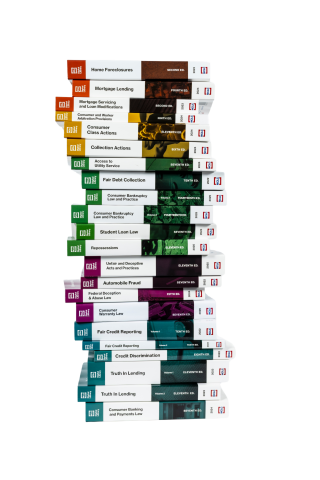
The first chapter of each consumer law treatise is available for free in NCLC's Digital Library.
Click any NCLC title below to start reading now:
Debtor Rights
Fair Debt Collection
Consumer Bankruptcy Law and Practice
Student Loan Law
Repossessions
Access to Utility Service
Mortgages & Foreclosures
Mortgage Lending
Mortgage Servicing and Loan Modifications
Home Foreclosures
Deception & Warranties
Unfair and Deceptive Acts and Practices
Federal Deception Law
Automobile Fraud
Consumer Warranty Law
Credit & Banking
Fair Credit Reporting
Truth in Lending
Consumer Credit Regulation
Credit Discrimination
Consumer Banking and Payments Law
Consumer Litigation
Collection Actions
Consumer Class Actions
Consumer Arbitration Agreements