
While lower income people generally satisfy their income tax obligations through withholding, a surprising number of low- and moderate-income people owe back taxes to the IRS. Common causes include:
- Insufficient withholding;
- Failure to file a return;
- Life changes affecting filing status, income, or eligibility for tax credits;
- Loss or disallowance of refundable credits (such as the Earned Income Tax Credit);
- Taxable retirement plan withdrawals;
- Self-employment income with insufficient estimated tax payments or failure to pay Social Security and Medicare taxes;
- Cancellation of debt income (COD income);
- Calculation errors and other mistakes.
Delinquent IRS debt is subject to collection for 10 years and accrues penalties and interest. The IRS has broad enforcement powers, placing bank accounts, wages, Social Security benefits, pension payments, and other property at risk.
This article outlines practical strategies for addressing IRS debt. The cardinal rule is simple: always file a tax return, even if you cannot afford to pay the taxes. Taxpayers should also avoid placing tax debt on a credit card unless the balance can be paid off immediately.
The article explains the best options available to taxpayers to avoid collection, enter into payment arrangements, or reduce the amount owed. It addresses spousal defenses, IRS enforcement mechanisms, the impact of bankruptcy, and available assistance. Understanding these options—and acting early—can significantly reduce the financial and practical consequences of IRS collection activity.
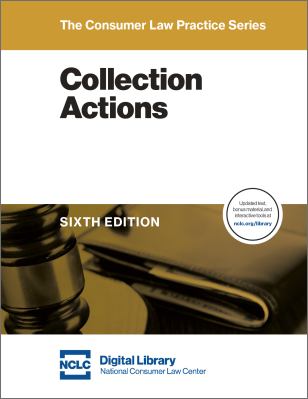
For a comprehensive analysis of debt enforcement, see NCLC’s Collection Actions, which examines enforcement across debt types and includes a detailed discussion of federal tax liabilities and IRS collection practices.
File a Timely Return or Get an Extension, Even If Unable to Pay the Taxes
One of the worst mistakes a taxpayer can make is not filing a tax return because they cannot afford to pay the taxes owed. Taxpayers should file a return regardless of their ability to pay the tax owed.
The penalty for failing to file is significantly higher than the penalty for failing to pay. If a return is filed more than 60 days late, the late-filing penalty is generally 5% of the tax owed for each month (or part of a month), up to a maximum of 25%. If a return is more than 60 days late, the minimum penalty is the smaller of $525 or 100% of the tax owed.
In comparison, the late-payment penalty is much lower—generally one-half of 1% per month up to a maximum of 25%. As a result, taxpayers should prioritize filing, even if they cannot pay the taxes owed.
For the 2025 tax year (filed in 2026), all taxpayers must file a federal income tax return if:
- Single and taxable income exceeds $15,750 (under 65) or $17,750 (65 or older).
- Head of a household and taxable income exceeds $23,625 (under 65) or $25,625 (65 or older).
- Married filing jointly with combined taxable income exceeding $31,500 (both under 65), $33,100 (one 65+), or $34,700 (both 65+).
- Self-employed and net earnings over $400.
Most taxpayers must file by April 15th. If additional time is needed, a six-month filing extension to October 15 is available by filing IRS form 4868. The extension is automatically granted and avoids the late-filing penalty, but it does not extend the time to pay. Interest and late-payment penalties continue to accrue until the tax is paid in full. Taxpayers should pay as much as possible with the extension request and then consider one of the payment options discussed below.
If a taxpayer does not file, the IRS may prepare a “substitute for return” (SFR) based on information it has received from third parties. The SFR often overstates the tax owed because it does not include deductions, exemptions, or credits to which the taxpayer may be entitled. Even if the IRS has prepared an SFR, taxpayers should always file their own return to correct the assessment and claim any deductions or credits.
Don’t Put Taxes on a Credit Card (Unless the Card Can Be Paid in Full)
Taxpayers who cannot afford to pay taxes owed should generally avoid placing IRS debt on a credit card. A financially stressed taxpayer is unlikely to be able to repay the credit card balance, which typically carries significantly higher interest rates and fewer protections than the IRS debt.
IRS debt is often less costly and more flexible than credit card debt. Interest and penalties accrue at lower rates, and the IRS offers a range of collection alternatives discussed below—including installment agreements, currently not collectible status, and offers in compromise—that are not available with credit card obligations. Furthermore, taxpayers who are unable to pay immediately may instead request a short-term hold on collection activity (often 30–90 days) or pursue one of the resolution options discussed below.
Four Options for Paying Back Due Taxes
—Generally
When a taxpayer files a return but cannot afford to pay the taxes due, several options may be available to address the liability. Which option is appropriate depends primarily on the taxpayer’s ability to pay after accounting for necessary living expenses.
- Enter into a monthly installment agreement;
- Request a hardship determination, known as “currently not collectible” (CNC) status;
- Seek a partial payment installment agreement;
- Negotiate a reduced liability through an offer in compromise.
These options require IRS approval, although installment agreements are generally granted where the taxpayer meets the IRS’s eligibility requirements, including agreeing to a payment plan that will satisfy the liability within the applicable period. If a request is denied, the taxpayer can appeal or ask for a review of the case.
—The Installment Agreement
Many taxpayers who owe less than $50,000 may qualify for a streamlined installment agreement, allowing them to pay their tax liability in monthly installments over a period of up to six years. Penalties and interest continue to accrue until the balance is paid in full. The IRS interest rate—based on the federal short-term rate plus 3%—is generally lower than rates charged on most unsecured loans and credit cards.
The penalty for late payment is one-quarter of 1% for each month. In some cases, penalties may be reduced or eliminated through the IRS’s First Time Penalty Abatement program or for reasonable cause. Taxpayers can request a penalty abatement using Form 843.
While an installment agreement is in effect and the taxpayer remains in compliance, the IRS generally will not take enforced collection action, such as levying wages or bank accounts. If less than $25,000 is owed and an installment agreement will fully pay the debt in six years or less, the IRS typically will not file any liens against the taxpayer.
Taxpayers can apply for an installment agreement online through the IRS website by submitting IRS Form 9465 or by calling the number listed on the IRS notice. A one-time user fee applies, that can be reduced when the taxpayer is low-income and the taxpayer sets up the agreement through the IRS website and agrees to pay using direct debit from a bank account. For more on installment agreements, see NCLC’s Collection Actions § 10.4.3.2.
—Non-Collectible Status
A taxpayer may be eligible for a temporary hardship determination, known as “currently not collectible” (CNC) status, which suspends most IRS collection activity, except for refund offsets. This status is generally granted where the taxpayer—after accounting for their necessary living expenses—does not have the ability to pay the tax debt.
The IRS determines eligibility using the allowable expenses listed on the IRS website to evaluate a taxpayer’s ability to pay. If the taxpayer’s income is insufficient to cover these expenses, the IRS will place the taxpayer in CNC status, remove all outstanding levies, and suspend collection activities.
CNC status is not permanent and does not reduce or forgive the tax debt. The IRS may monitor the taxpayer’s financial circumstances and may remove CNC status if a subsequent return or other information reflects an improved ability to pay.
To request CNC status, call the IRS at the number on your bill and ask to be placed into “currently non-collectible status.” The IRS may request financial information, including completion of a Form 433-F, Collection Information Statement, although, in many cases, the determination can be made based on information in the IRS data system or provided during the call. If CNC status is not specifically requested, the IRS may instead propose a payment plan.
If the IRS grants CNC status, it may file a lien with the county recorder’s office (or similar agency) if the balance exceeds $10,000, even if the taxpayer does not own any significant assets. The lien generally does not appear on credit reports. For more on CNC, see NCLC’s Collection Actions § 10.4.3.4.
—Partial Payment Installment Agreements
A partial payment installment agreement (PPIA) allows a taxpayer to make monthly payments based on their ability to pay, even where those payments will not fully satisfy the tax debt within the collection period. The IRS determines the payment amount based on the taxpayer’s income, expenses, and overall financial condition. A taxpayer must call the IRS or apply by mail. It is advisable first to seek that the account be placed into currently non-collectible status (CNC). If that fails, the taxpayer can ask for a PPIA.
Under a PPIA, penalties and interest continue to accrue, and the full balance will not be paid at the end of the collection period. Balances over $25,000 must be paid by direct debit from a bank account. Like any installment agreement and CNC, the IRS will automatically apply any refund (or overpayment) due to the taxpayer against the taxes they owe. The IRS may also file a Notice of Federal Tax Lien. For more on PPIA, see NCLC’s Collection Actions § 10.4.3.5.
—Offer-in-Compromise
An offer-in-compromise allows a taxpayer to settle a tax debt for less than the full amount owed. This option is generally appropriate where the taxpayer cannot afford to pay the liability in full through installment payments or liquidation of assets.
Generally, the IRS determines the taxpayer’s “reasonable collection potential,” which includes the taxpayer’s net equity in assets and ability to make installment payments from future income. The IRS also may accept an offer where an exceptional circumstance exists such that collection of the tax would create an economic hardship or would be unfair and inequitable even if some potential to pay exists. Many applications are rejected when the IRS determines that the taxpayer can pay the liability through installments or by liquidating available assets.
If the IRS accepts an offer in compromise, the taxpayer must remain fully compliant with filing and payment obligations for the next five years. Failure to do so may result in revocation of the agreement and reinstatement of the full tax liability. The IRS will apply any tax refund owed to the taxpayer for the year in which the offer is accepted to the outstanding liability.
To apply for an offer in compromise, follow the instructions on the IRS website or use Form 656 Booklet (Offer in Compromise) and submit the required forms, and supporting documents. A user fee of $205 generally applies, and the taxpayer generally must make an initial payment with the offer of 20% of the amount offered. Low-income taxpayers may qualify for a waiver of the fee and initial payment based on the income certification included in the Form 656 booklet.
The IRS review process takes six to twelve months. During that period, collection activity is generally suspended, although interest and penalties continue to accrue. If the offer is rejected, the taxpayer remains liable for the full amount, including accrued interest and penalties. For more on offers in compromise, see NCLC’s Collection Actions § 10.4.3.3.
Spousal Defenses
In limited circumstances, a taxpayer may obtain relief from liability from a joint tax return if the liability is attributable to the person’s spouse or former spouse and it would be unfair to hold the taxpayer responsible. This relief, referred to as “innocent spouse relief,” may apply in situations involving lack of knowledge of the liability, separation or divorce, or circumstances such as financial control or domestic abuse. Each case is evaluated based on the taxpayer’s individual facts and circumstances. To request relief, taxpayers must file Form 8857. These claims are fact-intensive and subject to specific legal standards, so assistance from a tax professional is often advisable. Resources for obtaining help are listed at the end of this article.
Steps the IRS Can Take to Force Payment
If one of the four options described above is not available, the IRS will begin collection by issuing a series of notices, including a Notice and Demand for Payment and, ultimately, a Final Notice of Intent to Levy.
When a taxpayer receives a final notice, they generally have 30 days to request a Collection Due Process (CDP) hearing by filing a Form 12153. A timely request will suspend most collection activity, including levies, during the appeals process. At the hearing, the taxpayer can request one of the payment alternatives discussed above and in certain situations can dispute the underlying liability.
If no action is taken, the IRS may levy bank accounts, wages, benefits, and property. Unlike other creditors, the IRS is not subject to the federal Consumer Credit Protection Act or state law limits on wage garnishment. Instead, the amount exempt from levy is determined under IRS formulas. For 2026, a single filer can protect $309.61 in wages per week, and a married couple filing jointly can protect $619.23 a week. The IRS can seize the remaining wages.
Certain income is exempt from levy, including unemployment benefits, workers’ compensation benefits, certain public assistance benefits, and income needed to pay court-ordered child support. The IRS may levy up to 15% of a taxpayer’s Social Security benefits (but not Supplemental Security Income) and in some circumstances may levy more. Unlike other federal benefit protections, there is no automatic exemption for an initial portion of Social Security benefits.
In practice, low-income taxpayers may be able to avoid or release a levy by requesting currently not collectible (CNC) status or negotiating a lower payment amount. Because the IRS may not automatically release a levy when CNC status is granted, taxpayers should specifically request that the levy be removed.
Certain property is exempt from seizure, including limited amounts of clothing, furniture, personal effects, and job-related tools. However, state law exemptions, such as a homestead exemption do not apply to federal tax liens and levies. A principal residence generally may not be seized without court approval, and in practice, seizures of homes are rare. See 26 U.S.C. § 6334(a)(13), (e).
The IRS Code’s list of exemptions from levy is exclusive; no other exemptions apply. The federal Claims Collection Act, discussed in NCLC’s Collection Actions § 10.2, does not apply to collection of IRS debts. When the government brings a court action to collect a tax debt, it may proceed under the Federal Debt Collection Procedures Act, which is discussed in NCLC’s Collection Actions § 10.3.
The IRS is unlikely to determine on its own if certain exemptions apply. The taxpayer should always raise them affirmatively with the IRS.
Unless most or all a taxpayer’s assets and income are exempt from levy, it is advisable to pursue one of the payment options discussed above to avoid enforced collection. Any agreement should be confirmed. For more on IRS remedies to collect delinquent taxes, see NCLC’s Collection Actions § 10.4.5. Taxpayer remedies for IRS collection abuses are discussed in id. § 10.2.15.10.
Effect of Taxpayer’s Bankruptcy on Tax Debt
Bankruptcy is generally less effective in addressing tax debt than most other debts. Only certain older tax debts can be discharged in a chapter 7 bankruptcy—for example, where the debt stems from a timely filed return that is more than three years old and meets other statutory requirements. Even when a discharge is available, existing tax liens are likely to remain attached to the debtor’s property.
In a chapter 13 bankruptcy, tax debts are addressed through a three-year to five-year repayment plan. Certain priority tax debts must be paid in full during the plan, while older or non-priority tax liabilities may be treated differently depending on the circumstances. For more on bankruptcy relief and tax debt, see NCLC’s Consumer Bankruptcy Law and Practice, particularly § 15.4.3.1.
Seeking Help
Taxpayers with IRS debt may be able to obtain assistance from several sources. Help may be available from a Low-Income Taxpayer Clinic, often based at law schools and legal services offices, that provide free or low-cost representation to eligible taxpayers. Clinic locations are listed in IRS Publication 4134: Low Income Taxpayer Clinic List, and can be searched online. Local legal services offices also can be located using www.lawhelp.org or a similar Legal Services Corporation website.
In some cases, a taxpayer can get assistance from the IRS Taxpayer Advocate Service, an independent organization within the IRS that helps taxpayers who have been unable to resolve tax problems through normal channels. To request Taxpayer Advocate Service assistance, visit the Tax Payer Advocate Service’s website, mail in IRS Form 911, or call 1-877-777-4778.

Related Publications
Free First Chapters
The first chapter of each consumer law treatise is available for free in NCLC's Digital Library.
Click any NCLC title below to start reading now:
Debtor Rights
Fair Debt Collection
Consumer Bankruptcy Law and Practice
Student Loan Law
Repossessions
Access to Utility Service
Mortgages & Foreclosures
Mortgage Lending
Mortgage Servicing and Loan Modifications
Home Foreclosures
Deception & Warranties
Unfair and Deceptive Acts and Practices
Federal Deception Law
Automobile Fraud
Consumer Warranty Law
Credit & Banking
Fair Credit Reporting
Truth in Lending
Consumer Credit Regulation
Credit Discrimination
Consumer Banking and Payments Law
Consumer Litigation
Collection Actions
Consumer Class Actions
Consumer Arbitration Agreements